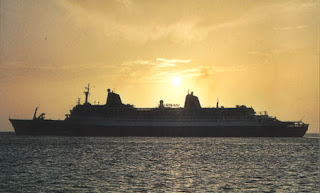
Supreme Court is yet to hear the matter regarding Riky ship although it preceded the Blue Lady case that was decided with its orders of 6th and 11th September, 2007. Like Riky, first a ship with dubious credentials leaves the shores of Germany. Then a in spite of manifest act of fraudulent misrepresentations month later, Indian Supreme Court allowed it to anchor even in the absence of legal grounds at Alang, Gujarat's massive shipbreaking yard, on humanitarian considerations. Unlike Clemenceau, this ship named Blue Lady(SS Norway, SS France)sailed through the law to live in the infamous company of Kong Frederik IX" alias "Frederik" alias "Riky" that sailed under the flag of an unknown country named Roxa. Blue Lady is unusual for the price at which it was bought at one stage. The price of this 16 floor and 315 meter long ship is 10 dollars.
GIVEN BELOW IS A SHORT NOTE BY SANJAY PARIKH, ADVOCATE FOR THE PETITIONER ON THE GENERAL RECOMMENDATIONS OF TECHNICAL EXPERT COMMITTEE BY THE TECHNICAL EXPERTS COMMITTEE (TEC) HEADED BY UNION ENVIRONMENT SECRETARY , MINISTRY OF ENVIRONMENT & FORETS (MOEF)
DECONTAMINATION:
1. The ship ought to be decontaminated prior to its export for dismantling, is concluded by this Hon’ble Court in its earlier judgement/order dated 14.10.2003 RFSTE Vs UOI reported in 2003 (9) Scale 303 = 2005 (10) SCC 510. The directions given by this Hon’ble Court were based on the recommendations of the High Powered Committee (HPC) constituted by this of experts under the Chairmanship of Professor M.G.K. Menon an eminent scientist. The High Powered Committee constituted pursuant to the directions of this Hon’ble Court, inter-alia, submitted recommendations on ship breaking and Hazardous waste. The counsel for the petitioner submitted a compilation of documents to show the origin of ship breaking issue [Terms of Reference NO. 14] and that “prior decontamination before export” was the core concern:
(i) Affidavit of Central Pollution Control Board (CPCB) dated 29.2.2000 stating that the ships should be properly decontaminated before export to India.
(ii) Order dated 20th April 2000 where the precise issue which was referred to High Powered Committee was that ships which come to India should be properly decontaminated before they are exported to India.
(iii) The Submission of Gujarat Maritime Board (GMB) before the High Powered Committee was that the Hazardous/toxic waste contained in the structure of empty ship should be removed by the exporting Countries as such wastes are banned under the Basel Convention. GMB categorically stated that a ship should be allowed to sail only when they are made completely hazardous/toxic free from every corner of the structure of the ship before being auctioned.
(iv) The report of the High Powered Committee –Professor Menon Committee after dealing in great detail with the Ship Breaking issue recommended that the “Ships-Destined for ship breaking on Indian Coast ought to be decontaminated as far as possible.”
(v) The judgment of this Hon’ble Court dated 14.10.2003 reported in RFSTE Vs. Union of India in 2005 (10) SCC 510 at page 536 all the directions given therein are important. Reading of directions 1, 2 and 16 makes the issue of prior decontamination very clear: such decontamination has to be ensured before arrival of the ship at the port of India. India’s stand in the Basel Convention should be that the ship should be decontaminated before its export to our country.
(vi) MoEF (which has changed its stand now in Blue Lady case) even in the French Ship (Le Clemenceau)) issue had filed an affidavit dated 10.2.2006 stating requirement of prior decontamination and that it is decontaminated “to the extent possible” without endangering ability of the ship to float.
These directions given by this Hon’ble Court on the basis of High Powered Committee recommendations, CPCB recommendations, GMB’s submissions, MoEF’s stand so far, can not be in any manner be diluted as it will be against the interest of the Country. It will be a clear case of dumping of Hazardous wastes, if a ship is allowed to enter in the Indian territory without decontaminating the entire Hazardous waste which contains lethal amount of asbestos/ PCBs, waste oil etc. It will affect our coastal area and the environment in an irreversible manner besides being a health hazard to the workers and people living in the vicinity. Merely because the land-fill facility is available in the 2006, after this Hon’ble Court’s directions in the year 2003, that it should not be indiscriminately filled up with the wastes dumped by the developed countries. It may be noted, leaving aside the fine distinction made between the ship for scrap and the hazardous waste, that ultimately such ship is a massive hazardous waste which is floating on the vessel. Such hazardous waste is otherwise banned under the Hazardous Waste Rules, 1989 as amended up to date.
PRIOR INFORMED CONSENT
2. The second important point is about the prior informed consent. This procedure is accepted in the Rio Declaration, Basel Convention on Transboundary Movement of Hazardous Wastes and Their Disposal, Cartegena Protocol, Rotterdam Convention on Prior Informed Consent Procedure, Stockholm Convention on Persistent Organic Pollutants (POPs) etc. Prior informed Consent is therefore an important component of the International Environmental Jurisprudence by which the harmful effects on the environment of the developing country, caused by a developed country, can be checked/prevented. The said principle has also been incorporated in the Hazardous Waste Rules, 1989 as amended vide Rule 11, 12, 13 and 14. The provisions of the Stockholm’s Declaration, Basel Convention and Rio Declaration have been accepted as part of Article 21 of the Constitution. In RFSTE Judgment (Supra ) as well as in several other judgments, this Hon’ble Court has accepted International Environmental Principles and such conventions as part of Article 21 of the Constitution. This Hon’ble Court may peruse Article 21 of Stockholm Declaration, 1972, Articles 12 and 19 of the Rio Declaration 1992, Article 6 of the Basel Convention and Rules 11 to 14 of the Hazardous Waste Rules, 1989 which are enclosed for perusal of this Hon’ble court.
Being a signatory and having ratified the Basel Convention, Stockholm Convention on POPs and the Rotterdam Convention, the principles of international law become applicable including the requirement to follow prior informed consent which is one of the important principle in the Basel Convention. The Countries which are member states of this convention can not send hazardous waste to the developing country without their prior consent as this alone (1) gives an opportunity to the developing country to examine whether it can dispose of such wastes in an environmentally sound manner (2) preventing dumping of waste which is hazardous to the public health and environment. A note on the status of asbestos/asbestos waste is enclosed. PCBs are banned under the HW Rules of 1989. They are also banned under the Stockholm Convention on POPs and the Basel Convention. It is reiterated that export of ship for dismantling should be with prior informed consent. The procedure of such consent is known to MoEF, Pollution Control Boards and all the authority in the country. Even in the commercial transaction of import and export such procedures are followed. These are ordinary procedural aspects.
It is not safe and is against all international norms, against the principals of sovereignty that any ship without decontamination and prior informed consent is allowed to enter in the territory of our country. The procedure for filing application for anchoring, beaching and subsequently an appeal are all procedures which violate the directions of this Hon’ble Court in 2003. 
The Blue lady is an example of such an illegality, which should not be allowed to get into the system. Our country should not depart from the procedure, which is followed by all other countries who are members of Basel Convention.
SEPTEMBER, 2007
Mediavigil believes that without democratisation of communication and the right to communicate, the freedom of expression is meaningless.It attempts to take note of environment and public health issues where governments and corporations provide sanitised information. It also keeps track of ecology and health issues. To know more about it, visit :www.toxicswatch.com, toxicswatch.blogspot.com, banasbestosindia.blogspot.com
Friday, September 28, 2007
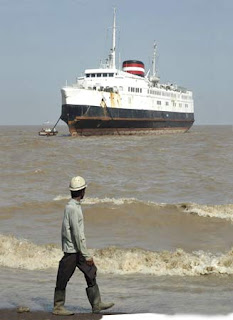
Blue Lady Does a Riky & Demolishes the Clemenceau precedent
Posted by
Gopal Krishna
at
7:57 AM
6
comments
Save us from toxic Blue Lady
Villagers near Alang ship breaking yard say dismantling of the contaminated ship poses grave danger to their health, livelihood; they will reapproach SC, which had given the go-ahead for it
Posted On Friday, September 28, 2007
PTI
Bhavnagar (Gujarat): More than 30,000 villagers in this district in Gujarat are up in arms against the Supreme Court order allowing dismantling of the contaminated Norwegian ship Blue Lady. The apex court in its recent order had cleared the decks for breaking the controversial ship anchored on the state coast since 2005.
However, this has not gone down well with the villagers who alleged that its dismantling in the vicinity of their villages would adversely affect their livelihood and health.Bhagvatsinh Haubha Gohil, sarpanch of Sosiya in Talaja tehsil, said an application was filed in the Supreme Court in March this year on behalf of 12 sarpanchs and 30,000 people living in the vicinity of the ship-breaking yard at Alang. “We are upset that our plea on the crucial issue has not been considered. “The ship-breaking would have a long-lasting impact on the health of the villagers as they will be exposed to the hazardous material in the ship.” Also, the toxic materials would affect seafood, the main source of livelihood for the villagers, he added.
Taking up cudgel on behalf of these villagers, Indian Platform on Ship-breaking, said, “The ship still has radioactive material at 1088 places. “We would file a review petition challenging the apex court.” The ship containing toxic asbestos material was anchored on the Gujarat coast on December 26, 2005, following objections from certain environmental groups that the ship would pose serious health problems to the workers engaged in the ship-breaking industry.
Posted by
Gopal Krishna
at
6:41 AM
1 comments
Monday, September 24, 2007
India, a victim of waste colonialism
Even before the verdict of the Supreme Court of India in the matter of this heavily contaminated ship named Blue Lady (SS Norway, SS France) was pronounced, the European precedent of upholding the environment and occupational health rights set by the recall of the French ship, Le Clemenceau was dismantled by the deafening silence of Germany and Malaysia even as several international environmental and labour laws were intentionally mutilated and violated in full public view with impunity.
It all began with a Boiler Explosion on toxics laden ship named SS Norway, owned by multinational company Norwegian Cruise Lines (NCL) of Star Cruise Ltd at Miami, US in 2003 that made it a dead ship. Thereafter it came to German port of Bremerhaven. It may be noted that the owner of the ship was indicted of Environmental Crime by US Justice Department. Newly discovered evidence confirm that as far back as 2004, the owners of the SS Norway had decided to dispose of the vessel but it misled German authorities by declaring that the vessel was going to Asia for re-use. The departure of the SS Norway (now SS Blue Lady, ex SS France) from the port of Bremerhaven, Germany on May 23, 2005, triggered a continuing criminal offense that persists to this day.
Under the Basel Convention and its Basel Ban Amendment, and European Union law, Germany is prohibited from disposing of the SS Norway by exporting it to any country outside of the European Union and to country not members of the Organization for Economic Cooperation and Development, 30 of the most industrialized nations in the world, without decontaminating the vessel of all the toxic wastes onboard.
The ship left the German port and came to Malaysia for refurbishment and conversion into a hotel or training ship. On 5th May, 2006, the ship left Malaysia for Dubai by informing the Malaysian authorities that it is going for repairs. In January 2006, the ship was sold to Bridgend Shipping Ltd, Monorovia, Liberia at a price of 10 Dollars. It was at this stage that the ship was once again renamed SS Blue Lady. After after Bangladesh refused entry to this ship in February, 2006, Hariyana Ship Demolitions Pvt Ltd bought the ship from Bridgend Shipping Ltd and started moving towards Indian territorial waters without permission when the matter was brought to the notice of the apex court it sought anchorage permission through Prodipto Ghosh, the then Union Environment Secretary on humanitarian grounds in May 2006. The court gave the permission on 5th June, 2006with no equity on the owners but the ship vanished for 25 days and came back to anchor 30 June, 2006. Subsequently, although the permission was only for anchoring, Ghosh in consultation with Gopal Subramaniam, Additional Solicitor General allowed the ship to beach on 15th August, 2006. Thereafter, the Technical Experts Committee headed by Ghosh started arguing that beaching is an irreversible process in its final report submitted to the Court on 30th August 2006.
Curiously, the final report of the Committee headed by Ghosh did not disclose to the court that on 31 July 2006, one Priya Blue Industries Pvt Ltd has written a letter to Gujarat Maritime Board (GMB) claiming itself to be “new buyers of the above vessel”. It may be noted that all earlier processes were based on the ownership claim of Hariyana Ship Demolitions Pvt Ltd, Priya Blue was never in picture; it is not made clear when it purchased the ship. No purchase document or proof of ownership of the ship has been presented till date.
Unmindful of these evident misleading and cunning machinations, the Supreme Court advanced “The concept of "balance" under the principle of proportionality applicable in the case of sustainable development…” and ruled that “It cannot be disputed that no development is possible without some adverse effect on the ecology and environment, and the projects of public utility cannot be abandoned and it is necessary to adjust the interest of the people as well as the necessity to maintain the environment. A balance has to be struck between the two interests. Where the commercial venture or enterprise would bring in results which are far more useful for the people, difficulty of a small number of people has to be bypassed. The comparative hardships have to be balanced and the convenience and benefit to a larger section of the people has to get primacy over comparatively lesser hardship."
It is noteworthy that there were two judgments in this case dated 6 September 2007 and 11 September, 2007 in the Writ Petition (Civil) 657 of 1995 in the matter of Hazardous Wastes/Ship-breaking/Blue Lady. The Division Bench of Justice Dr. Arijit Pasayat and Justice S. H. Kapadia delivered both the orders. The same Bench was seized with Le Clemenceau case. The first order is a general order on the issue of ship-breaking. The second order is with specific reference to Blue Lady (SS Norway). This order gave a go ahead to dismantling of a asbestos and radioactive material laden ship named Blue Lady, which has been dumped in Indian waters.
September 6, 2007 order establishes that it is not in dispute that the entry of Blue Lady in Indian territorial waters and continued presence since June 2006 is in violation of Court’s order of 14th October, 2003, Basel Convention on the Control of Transboundary Movements of Hazardous Wastes and their Disposal, Rotterdam Convention on the Prior Informed Consent Procedure for Certain Hazardous Chemicals and Pesticides in International Trade, Stockholm Convention on POPs and International Labour Organisation (ILO)'s Radiation Protection Convention, 1960. India is signatory to these international environmental and labour laws.
Exposing these mostly Bhojpuri and Oriya speaking causal and migrant workers and the villagers of Bhavnagar panchayats to all kinds of toxic exposures and threatening their source of livelihood i.e. fishing due to marine pollution has become a routine affair and a vulture story for the entire global and Indian media. By Government's own admission the underground water in Alang is heavily polluted, ship-breaking industry is known to have worse accident rate (2 workers per 1000) than the mining industry (0.34 per 1000) which is considered the worst in the world and 16 % of workers here are suffering asbestos related diseases.
The relevant part of the 11 September order refers to former Attorney General of UK saying, "In his Keynote Address, on 'Global Constitutionalism', reported in Stanford Law Review vol. 59 at p. 1155, Lord Goldsmith, Her Majesty's Attorney General (UK), stated that British Constitution though unwritten is based on three principles, namely, rule of law, commitment to fundamental freedoms and principle of proportionality. European Convention on Human Rights ("ECHR") also refers to the concept of balance."
Reading through the 21-page keynote address of Lord Goldsmith published in Stanford Law Review one came across the paragraph that has been referred to in the court order. It reads as follows:
"The third principle is that of proportionality. One of the key themes of the ECHR is the concept of balance. The Convention took its lead in this respect from the Universal Declaration of Human Rights—and in particular, article 29which expressly recognises the duties of everyone to the community and the limitation on rights in order to secure and protect respect for the rights of others. Under the Convention some rights are absolute. They are so fundamental that there can be no compromise on them. We take the view that the prohibition on torture is simply nonnegotiable. I regard the right to a fair trial as another of those fundamentals. That is why we have rejected reducing the burden of proof for terrorism offences and allowing secret evidence in terrorism trials."
It is shocking to note that the speech in question is not at all relevant to the plight of workers, villagers, environment, ship-breaking industry, Steel or Hazardous Wastes Management. Therefore, it does not appear to be a convincing rationale for knowingly letting the most vulnerable workforce and communities suffer from asbestos exposure.
By order dated 11/9/2007 this Division Bench of the Hon’ble Supreme Court of India granted permission for the dismantling of the ship Blue Lady at Alang, Gujarat based on the submission by Gopal Subramaniam, Additional Solicitor General to the effect that the ship does not have any more radioactive material and beaching is irreversible.
Contrary to the recommendations of the Technical Experts Committee, Gujarat Pollution Control Board, Gujarat Enviro Protection and Infrastructure Ltd (GEPIL) and the Priya Blue Shipping Pvt Ltd, the petitioner pointed out to the Court that the ship contained radioactive substances at thousands of places. But in the order passed by the Hon’ble Supreme Court it is merely stated, “There was also an apprehension rightly expressed by the petitioner regarding radioactive material on board the vessel Blue Lady. Therefore, an immediate inspection of the said vessel beached at Alang since 16.8.2006 was undertaken by Atomic Energy Regulatory Board (AERB) and by Gujarat Maritime Board (GMB). The apprehension expressed by the petitioner was right. However, as the matter stands today, AERB and GMB have certified that the said vessel Blue Lady beached in Alang no more contains any radioactive material on board the ship”.
In this regard it may be pertinent to state that the petitioner had referred to a letter sent by one Mr Tom Haugen (who had been the Project Manager for Engineering, Delivery, Installation, Commissioning and later services and upgrades as regards Fire Detection Installation Systems on board the Blue Lady) stating therein that the fire detection system on the Blue Lady contained 5500 detection points and had 1100 radioactive elements, Americium 241. However, a perusal of the aforementioned report of the inspection undertaken on 14.8.2007 shows that the entire inspection of 16 floors of 315 meter long ship seems to have been completed within a period of 4 hours (a commendable task no doubt) and the report states that they could detect only 12 smoke detectors containing Americium 241. Having found these 12 smoke detectors containing radioactive materials, the report concludes that the ship “now, does not contain any radioactive material on board”.
No mention is made as regards the balance 1088 smoke detectors containing Americium 241. In a letter to the Prime Minister dated 19th September, 2007, Haugen has reiterated the fact about enormity of radioactive material on the ship given the fact that he himself supervised its installation.
The Court has been misled into going only on the aspect concerning asbestos and has accepted that 85 % of the asbestos is contained in the form of wall partitions, ceilings and the roofing in rooms and galleries and if removed without damaging them, they would be reusable. Firstly, no mention seems to have been made as regards the balance 15 % of the asbestos contained on the Blue Lady, which in itself would come to 186 MT of asbestos-the only assumption that one could draw from the same is that the removal of this 186 MT of asbestos is bound to cause asbestosis, Mesothelioma, Lung Cancer and other related illnesses.
The Court was misled by the ingenious arguments (curiously advanced by the Learned Additional Solicitor General) that “in the present case, the vessel does not contain single kilogram of asbestos and/or ACM as cargo”, though it had never been the stand of the petitioner that asbestos or Asbestos Containing Material (ACM) was being sought to be brought in as cargo.
It is interesting to note that in the observations/recommendations made in the 29th Report of the Committee on Petitions (14th Lok Sabha), dated 17.8.2007 it has been submitted that “the committee are extremely are concerned that the ship contains an estimated 1240 MT of ACM and about 10 MT of PCBs as inbuilt material and as a part of its structure. In case the asbestos fibers are inhaled or the PCBs are consumed by humans beings, the same may cause cancer unless proper precautions are taken for safe handling of these materials by the workers. The committee strongly deprecate the repeated stand taken by the ministry that since no hazardous waste have been allowed on boards as cargo, there is no violation of the Hon’ble Supreme Court directions. The Committee need not emphasize that hazardous waste whether as cargo or inbuilt material are equally detrimental to the environment and to the human health.” The Environment Ministry gave oral evidence before the Committee but did not disclose the radioactive content of the ship.
The petitioner brought to the notice of the Court that asbestos waste is banned in India and Asbestos is banned in some 45 countries and even World Trade Organisation has passed a verdict against it because of its carcinogenicity at every level of exposure. There is indisputable evidence that safe and controlled use of asbestos is impossible but the Additional Solicitor General misinformed the court about its safe use and re-use. Gopal Subramaniam, Additional Solicitor General, an opponent of Citizen's Right to Information argued that asbestos is safe for Indians. Therefore, compensation for asbestos victims is not possible. He justified Hazardous Waste
Dumping in India because asbestos waste in structure is not hazardous arguing that asbestos waste is banned in India but that applies to 'virgin' asbestos!! He misled the Court by persuading it to rely on an unreliable report of Prodipto Ghosh, Chairman Technical Experts Committee on Hazardous Wastes relating to Ship-breaking, which had submitted that there is no radioactive material on the ship. Subramaniam was compelled to partially admit the presence of radioactive material on Blue Lady but showed his characteristic disrespect for truth. Consequently, the court has not clarified whether ‘ban on asbestos waste’ rule has been violated and if not then where will it apply if not in this case.
Allen Todd Busch, Vice President & General Manager, Titan Salvage, a Crowley Company one of the largest and most respected salvage companies operating has written to the Prime Minister saying, “the primary reason the court has ruled in favor of breaking the vessel, in its current position, is because there is a belief that the vessel can not be removed from where it now rests. This is not the case. We have the capability and expertise to refloat the vessel. Please allow us to present to the Prime Minister and India’s Court our credentials, history and experience that there is actually very high probability that the BLUE LADY is not at all in an "irreversible" position, as the esteemed Court has found.” Also as per the Technical Report from Aaage Anderson (Memo on Refloating Blue Lady) who was involved in the Le Clemenceau case, the ship in question can be refloated.
The Court has not considered a very crucial contention raised by the petitioner with regard to “Prior Informed Consent” which has been accepted in the Rio Declaration, Basel Convention, Cartegena Protocol, Rotterdam Convention, Stockholm Convention etc-this principle has also been incorporated in Hazardous Wastes Rules 1989. As per the principle no member state can send hazardous waste to a developing country without its prior consent. Another important aspect raised by the petitioner has been given a complete go by namely, that a ship ought to be decontaminated prior to its export for dismantling (which view was expressed by the Hon’ble court in its earlier judgement of 14.10.2003 and reiterated in 6.9. 2007 order).
Apart from the above, the petitioner had also raised apprehension regarding the security aspect and the violations thereof with regard to the entry of the ship in the Indian territorial waters-that despite the ship purchaser having obtained an order permitting anchoring in Indian territorial waters on humanitarian grounds, the ship was taken to Dubai for 25 days and thereafter brought back to India. Despite the petitioner expressing his apprehensions regarding the implication of the above action as also bringing to the notice of the court a Naval Intelligence report that the mafia was involved in the ship-breaking activities in India and that the same coupled with the fact that the Blue Lady (despite allegedly being a ship which on dismantling would yield 41, 000 MT of Steel and provide employment to 700 workmen) was sold for a paltry sum of 10 dollars to the purchaser, no attention has been focused on this aspect.
Even as it was becoming clearer that the Blue Lady (SS Norway, SS France) can be sent back, the Additional Solicitor General misled the court into believing that since beaching is irreversible, Blue Lady cannot be sent back. The ship in question is in illegal traffic as per all relevant laws in the Rule Book. There is documentary proof that such ships are required certification for prior decontamination of the ship in the country of export. In the case of Blue Lady let alone decontaminating the ship as per the court’s order, it has till date not even been claimed that it has been decontaminated.
It is quite sad and disappointing that the Hon’ble Supreme Court has not dealt with the application filed by Bhagvatsinh Haluba Gohil, Sarpanch, Village Sosiya, Tehsil Talaja, and District Bhanvnagar on behalf of 30, 000 villagers and 12 panchayats of Bhavnagar district of Gujarat have filed the case through their heads of village councils (Sarpanch) in the Supreme Court. These villages are in the vicinity of Alang ship-breaking yard. They have sought directions asking the court to "direct that the ship named "Blue Lady" (SS Norway) be not allowed to be dismantled at the Alang Ship-breaking yard." The villagers have argued that "The dismantling of the ship would have hazardous effect on the residents of the villages near the Alang ship breaking yard as the ship contains large amount of asbestos which, when exposed is hazardous to the health of the residents living in the twelve villages."
An acclaimed scientist, a former Union Minister, Prof M.G.K. Menon, wrote to Chief Justice of India as Chairman, Supreme Court’s High Power Committee on Hazardous Wastes seeking compliance with Basel Convention on the Control of Transboundary Movements of Hazardous Wastes and their Disposal in Blue Lady matter and argued that it should be sent back to Malaysia or Germany from where it came without decontamination.
Following oral evidence from Ministry of Environment & Forests, Prabhunath Singh, Chairman, Parliamentary Petitions Committee deprecated the repeated stand taken by Environment Ministry on Blue Lady that since no hazardous wastes has been allowed on board as cargo, there is no violation of Supreme Court directions in a report to tabled in the Lok Sabha on 22 August, 2007 in response to a petition raised by Basudev Acharya, senior parliamentarian arguing that Blue Lady's entry in our territory violates India's sovereignty. Earlier Kalraj Mishra, Member, Parliamentary Committee on Industry had demanded that Blue Lady is 50 times more toxic than the French ship Le Clemenceau that was sent back, therefore, it should be sent back.
Dismantling of Blue Lady would set a very bad precedent for it seems contrary to established Prior Informed Consent Procedure given the fact that the court is yet to hear the application on the issue of asbestos exposure to these villagers in Alang, the scrapping of Riky and whether or not Blue Lady has complied with the Supreme Court order of 14th October, 2003 and September 6, 2007. In effect, Justice Arijit Pasayat has ruled that Contaminated Ships are banned but Blue Lady (SS Norway) is irreversible and Justice S H Kapadia implied that although Blue Lady beached illegally in Alang since beaching is irreversible so accept the fait accompli!
In any case hazardous and poisonous material does not become non-hazardous and non–poisonous because the Environment Ministry and Additional Solicitor General thinks so. While the verdict illustrates the priority the India’s apex court accords to human life and environment, it also exposes European position on ship-breaking and asbestos. Has European laws changed after toxic ship Le Clemenceu was recalled due to a verdict by French court?. Germany allowed violation of Basel Convention by permitting illegal traffic of Star Cruise's 45 years old ship.
Blue Lady story shows how hazardous industries, substances, wastes are being transferred to India in full public glare due to the connivance of Indian authorities who have compelled the highest court to decide matters on technical and humanitarian grounds rather than on legal basis. More specifically it is a case of ship owners successfully escaping exorbitant decontamination cost in Europe. It drives home a message as to how globalisation of waste takes place and how waste colonies are established both within the countries and across the countries to keep harmful materials away from the rich with the help of either indulgent or gullible government servants.
Posted by
Gopal Krishna
at
9:56 PM
7
comments
World Bank Group under Scanner for Asbestos use in India
People's Tribunal on World Bank takes note of Asbestos Hazards
New Delhi, 25/9/2007: On the final day of Independent Peoples Tribunal (IPT) on the World Bank Group (WBG), it was presented with evidence of Bank’s own officials suggesting how it finances huge infrastructure projects all over the world including India despite this there is no formal restrictions on the use of asbestos-cement (A-C) sheets and pipes in these projects. Over 90 percent of all asbestos used today is in A-C sheets and pipes, and this production is concentrated in poor countries. Ban Asbestos Network of India (BANI) called for urgent action in India and elsewhere to end the needless slaughter caused by this environmental and occupational health catastrophe.
The IPT heard the testimonies on Toxics and the role of WBG wherein it was alleged, 'The Bank is perpetrating toxic colonialism by funding discredited and polluting technology interventions'. The 4-day IPT was held from 21 –24 September at Jawaharlal Nehru University, New Delhi.
Asbestos is a proven human carcinogen (a substance which can cause cancer). No safe level can be proposed for asbestos products because there is no threshold of exposure which is not safe. Asbestos accumulates in the body; the microscopic fibers which lodge in tissues are time bombs that can cause cancer years later. Since asbestos exposure is cumulative, young people are in particular need of protection. The World Health Organization (WHO), the International Labor Organization (ILO), and the International Social Security Association (ISSA) have all called for a global ban on asbestos use.
Despite this, asbestos consumption is rising dramatically in India. The International Program on Chemical Safety has condemned the use of asbestos in construction materials as especially dangerous because of the large number of workers in construction and the extreme difficulty of protecting them. The continuing usage of these materials constitutes a danger to workers manufacturing the products and communities exposed to wastes and air pollution from manufacturing and construction sites. The buildings and pipelines installed today will pose dangers for future generations of people in the countries where they are used, if they contain asbestos. Asbestos is processed through various methods and used for making cement products, gasket sheet material, friction material, heat resistant textiles, some special applications like in paints, thermoplastics etc. In addition it is used for textiles, laminated products, tape, gland packing, packing ropes, brake lining and jointing used in core sector industries such as automobile, heavy equipment, petro-chemicals, nuclear power plants, fertilizers, thermal power plants, transportation, defense and railways. It is used in manufacture of asbestos cement roofs, pressure and non-pressure pipes, sewage, irrigation and drainage system in urban and rural areas etc.
All forms of asbestos except Chrysotile Asbestos is banned in India. Mining of asbestos is also banned since no new lease for asbestos mining is allowed. The export and import of asbestos waste (dust and fiber) is also banned as per Hazardous Waste (Management & Handling) Rules, 2003. But import of Chrysotile asbestos is still allowed despite ban in some 40 countries due to incurable but preventable cancer caused by this killer fiber in the name of its continued mythical “safe and controlled use”. Asbestos-related diseases constitute the largest occupational epidemic of the 20th century; this global scourge has been acknowledged by reputed medical journals like the British Medical Journal (January 31, 2004).
Despite this knowledge, no attempt has been made to quantify the total number of asbestos victims in India despite the national asbestos crisis. While asbestos imports and use continues to grow in countries like India, its use has decreased significantly in developed countries. Canada exports almost all of the asbestos (more than 96%) mined in the country, especially to Asia, including India, whereas asbestos use in Canada is almost non-existent. In the US, demand for asbestos has continued to decline and a Ban Asbestos Act is on the Congressional agenda. The developed world has responded to the asbestos health catastrophe with bans on the use of asbestos. On the contrary, asbestos use is expanding in India and the government actively colludes with the asbestos industry by instituting pro-asbestos measures such as the reduction of taxes on asbestos imports. The reduction of import duty reduces the cost of asbestos and thereby gives harmful asbestos-containing products a price advantage over safer materials.
Although the Supreme Court of India has directed Union and State Governments to take action consistent with ILO resolutions and the ILO Convention on Asbestos, Ministries in India have not taken action in pursuance of ILO’s Resolution on Asbestos dated 14th June, 2006 stating “the elimination of the future use of asbestos and the identification and proper management of asbestos currently in place are the most effective means to protect workers from asbestos exposures and to prevent future asbestos-related disease and deaths.”. Even if the use of asbestos products is discontinued there are and will be a massive number of victims from past asbestos exposures. This is what has happened elsewhere and there is no doubt the asbestos epidemics which have occurred in the US, Europe, Australia and Japan will be replicated in India and other asbestos consuming countries. Information revealing the dangers to human health of exposure to asbestos was available over 60 years ago. Despite the efforts of the asbestos industry to suppress negative findings, during the 20th century epidemiological studies and medical data conclusively proved the link between asbestos and a number of debilitating and fatal diseases.
In a written submission to the IPT, BANI demanded, “The World Bank should adopt a formal policy of forbidding asbestos in all of its projects and require the use of safer substitute construction materials. Such substitution is feasible as shown by the bans in more than 40 countries.. The World Bank should also adopt best practice guidelines for the minimization of asbestos exposures in projects where in-place asbestos materials are disturbed by renovation or demolition activities.” It has called upon the World Bank to support the asbestos action program just started by the WHO
(See:http://www.who.int/occupational_health/publications/asbestosrelateddiseases.pdf)
and use its influence and leverage to press for cessation of asbestos use all over world.
.
BANI drew attention of the jury towards the report of World Bank environmental official Robert Goodland, "Sustainable Development Sourcebook for the World Bank Group's Extractive Industries Review: Examining the Social and Environmental Impacts of Oil, Gas, and Mining" (3 December, 2003). Policy options for asbestos (p. 141) included, "5. The WBG should work with the rest of the UN system to foster a global ban on asbestos." Other policy recommendations were:
1. The WBG should not provide support for any asbestos-containing products, even indirectly, including through mining, manufacture, commerce and use. The rest of the WBG should follow the lead of IFC, which has put asbestos on its Exclusion List.
2. The WBG should actively assist with the safe removal and disposal of asbestos, and adopt a best practice demolition code.
3. The WBG should support asbestos manufacturers in developing countries to
switch out of asbestos-containing products and into less risky products.
4. The WBG should support victims of asbestos exposure, including litigation for compensation of victims, and/or the creation of a financial compensation mechanism akin to the mechanism being explored in the case of toxic mine waste and the toxic lagoon legacy issue taken up by the Extractive Industry Review (See eireview.net).
The World Bank Group must explain why it has not taken the recommended actions.
Posted by
Gopal Krishna
at
12:04 PM
1 comments
Thursday, September 20, 2007
Blue Lady has 1240 MT of asbestos & radioactive Material at 1088 Places

Asbestos, PCB & Lead laden Blue Lady is Reversible even after beaching
New Delhi: By order dated 11/9/2007 a Division Bench of the Hon’ble Supreme Court of India (comprising Dr Justice Arijit Pasayat and Hon’ble Mr Justice S H Kapadia) granted permission for the dismantling of the ship Blue Lady at Alang, Gujarat based on the submission by Gopal Subramaniam, Additional Solicitor General to the effect that the ship does not have any more radioactive material and beaching is irreversible.
Contrary to the recommendations of the Technical Experts Committee, Gujarat Pollution Control Board, Gujarat Enviro Protection and Infrastructure Ltd (GEPIL) and the Priya Blue Shipping Pvt Ltd, the petitioner pointed out to the Court that the ship contained radioactive substances at thousands of places. But in the order passed by the Hon’ble Supreme Court it is merely stated, “There was also an apprehension rightly expressed by the petitioner regarding radioactive material on board the vessel Blue Lady. Therefore, an immediate inspection of the said vessel beached at Alang since 16.8.2006 was undertaken by Atomic Energy Regulatory Board (AERB) and by GMB. The apprehension expressed by the petitioner was right. However, as the matter stands today, AERB and GMB have certified that the said vessel Blue Lady beached in Alang no more contains any radioactive material on board the ship”.
In this regard it may be pertinent to state that the petitioner had referred to a letter sent by one Mr Tom Haugen (who had been the Project Manager for Engineering, Delivery, Installation, Commissioning and later services and upgrades as regards Fire Detection Installation Systems on board the Blue Lady) stating therein that the fire detection system on the Blue Lady contained 5500 detection points and had 1100 radioactive elements, Americium 241. However, a perusal of the aforementioned report of the inspection undertaken on 14.8.2007 shows that the entire inspection of 16 floors of 315 meter long ship seems to have been completed within a period of 4 hours (a commendable task no doubt) and the report states that they could detect only 12 smoke detectors containing Americium 241. Having found these 12 smoke detectors containing radioactive materials, the report concludes that the ship “now, does not contain any radioactive material on board”.
No mention is made as regards the balance 1088 smoke detectors containing Americium 241. In a letter to the Prime Minister dated 19th September, 2007, Haugen has reiterated the fact about enormity of radioactive material given the fact that he himself supervised its installation.
The Court has been misled into going only on the aspect concerning asbestos and has accepted that 85 % of the asbestos is contained in the form of wall partitions, ceilings and the roofing in rooms and galleries and if removed without damaging them, they would be reusable. Firstly, no mention seems to have been made as regards the balance 15 % of the asbestos contained on the Blue Lady, which in itself would come to 186 MT of asbestos-the only assumption that one could draw from the same is that the removal of this 186 MT of asbestos is bound to cause asbestosis, Mesothelioma, Lung Cancer and other related illnesses.
The Court was misled by the ingenious arguments (curiously advanced by the Learned Additional Solicitor General) that “in the present case, the vessel does not contain single kilogram of asbestos and/or ACM as cargo”, though it had never been the stand of the petitioner that asbestos or Asbestos Containing Material (ACM) was being sought to be brought in as cargo. It is interesting to note that in the observations/recommendations made in the 29th Report of the Committee on Petitions (14th Lok Sabha), dated 17.8.2007 it has been submitted that “the committee are extremely are concerned that the ship contains an estimated 1240 MT of ACM and about 10 MT of PCBs as inbuilt material and as a part of its structure. In case the asbestos fibers are inhaled or the PCBs are consumed by humans beings, the same may cause cancer unless proper precautions are taken for safe handling of these materials by the workers. The committee strongly deprecate the repeated stand taken by the ministry that since no hazardous waste have been allowed on boards as cargo, there is no violation of the Hon’ble Supreme Court directions. The Committee need not emphasize that hazardous waste whether as cargo or inbuilt material are equally detrimental to the environment and to the human health.” The Environment Ministry gave oral evidence before the Committee but did not disclose the radioactive content of the ship.
The petitioner brought to the notice of the Court that asbestos waste is banned in India and Asbestos is banned in some 45 countries and even World Trade Organisation has passed a verdict against it because of its carcinogenicity at every level of exposure. There is indisputable evidence that safe and controlled use of asbestos is impossible but the Additional Solicitor General misinformed the court about its safe use and re-use. It hs been submitted that Rule 12 (i) of the Hazardous Wastes (Management and Handling) Rules under the Environment Protection Act, 1986 bans import of asbestos. As per Schedule 8 Serial No. 15 describes waste asbestos (dust and fibres) as hazardous wastes prohibited for import and export. The court has not clarified whether or not this Rule has been violated and if not then where will it apply if not in this case.
Allen Todd Busch, Vice President & General Manager, Titan Salvage, a Crowley Company one of the largest and most respected salvage companies operating has written to the Prime Minister saying, “the primary reason the court has ruled in favor of breaking the vessel, in its current position, is because there is a belief that the vessel can not be removed from where it now rests. This is not the case. We have the capability and expertise to refloat the vessel. Please allow us to present to the Prime Minister and India’s Court our credentials, history and experience that there is actually very high probability that the BLUE LADY is not at all in an "irreversible" position, as the esteemed Court has found.” Also as per the Technical Report from Aaage Anderson (Memo on Refloating Blue Lady) who was involved in the Le Clemenceau case, the ship in question can be refloated.
The Court has not considered a very crucial contention raised by the petitioner with regard to “Prior Informed Consent” which has been accepted in the Rio Declaration, Basel Convention, Cartegena Protocol, Rotterdam Convention, Stockholm Convention etc-this principle has also been incorporated in Hazardous Wastes Rules 1989. As per the principle no member state can send hazardous waste to a developing country without its prior consent. Another important aspect raised by the petitioner has been given a complete go by namely, that a ship ought to be decontaminated prior to its export for dismantling (which view was expressed by the Hon’ble court in its earlier judgement of 14.10.2003 and reiterated in 6.9. 2007 order).
Apart from the above, the petitioner had also raised apprehension regarding the security aspect and the violations thereof with regard to the entry of the ship in the Indian territorial waters-that despite the ship purchaser having obtained an order permitting anchoring in Indian territorial waters on humanitarian grounds, the ship was taken to Dubai for 25 days and thereafter brought back to India. Despite the petitioner expressing his apprehensions regarding the implication of the above action as also bringing to the notice of the court a Naval Intelligence report that the mafia was involved in the ship-breaking activities in India and that the same coupled with the fact that the Blue Lady (despite allegedly being a ship which on dismantling would yield 41, 000 MT of Steel and provide employment to 700 workmen) was sold for a paltry sum of 10 dollars to the purchaser, no attention has been focused on this aspect.
Even as it was becoming clearer that the Blue Lady (SS Norway, SS France) can be sent back, the Additional Solicitor General misled the court into believing that since beaching is irreversible Blue Lady cannot be sent back. It may be noted that Blue Lady ship was granted anchoring permission at the request of Rajeev Reniwal, Hariyana Ship Demolitions Pvt Ltd, Sosiya Ship-breaking yard, Bhavnagar, Gujarat on humanitarian grounds on 5 June, 2006. Hariyana Ship Demolitions Pvt Ltd had bought the ship Bridgend Shipping Ltd, Monorovia, Liberia. Bridgend Shipping Ltd had bought SS Norway from Norwegian Cruise Line Ltd, a wholly owned subsidiary of Star Cruise Lines Ltd in Januray 2006 . It was at this stage that the ship was once again renamed SS Blue Lady. The ship in question is in illegal traffic as Basel Convention. There is documentary proof that such ships are required certification for prior decontamination of the ship in the country of export. In the case of Blue Lady let alone decontaminating the ship as per the court’s order, it has till date not even been claimed that it has been decontaminated.
It is quite sad and disappointing that the Hon’ble Supreme Court has not dealt with the application filed by Bhagvatsinh Haluba Gohil, Sarpanch, Village Sosiya, Tehsil Talaja, and District Bhanvnagar on behalf of 30, 000 villagers and 12 panchayats of Bhavnagar district of Gujarat have filed the case through their heads of village councils (Sarpanch) in the Supreme Court. These villages are in the vicinity of Alang ship-breaking yard. They have sought directions asking the court to "direct that the ship named "Blue Lady" (SS Norway) be not allowed to be dismantled at the Alang Ship-breaking yard." The villagers have argued that "The dismantling of the ship would have hazardous effect on the residents of the villages near the Alang ship breaking yard as the ship contains large amount of asbestos which, when exposed is hazardous to the health of the residents living in the twelve villages." Dismantling of Blue Lady would set a very bad precedent for it seems contrary to established Prior Informed Consent Procedure given the fact that the court is yet to hear the application on the issue of asbestos exposure to these villagers in Alang, the scrapping of Riky and whether or not Blue Lady has complied with the Supreme Court order of 14th October, 2003 and September 6, 2007.
Posted by
Gopal Krishna
at
2:29 AM
0
comments
Wednesday, September 19, 2007
Press Invite for Blue Lady (SS Norway) Conference on 20 September

Press Invite
Attention: News Editor / Chief Reporter
The Indian Platform on Ship-breaking -a coalition of Geenpeace, Ban Asbestos Network of India (BANI), Corporate Accountability Desk, Basel Action Network and other human, labour and environment rights organizations invites you to a press conference on 20th September, 2007 at Asia Foreign Correspondents Cub. The conference would be on the issue of environmental and occupational health in Ship-breaking yard in Alang, Bhavnagar Gujarat in the wake of the Supreme Court order on Hazardous Wastes/ Ship-breaking/Blue Lady (SS Norway, SS France).
Date: 20 September, 2007
Time: 1 PM
Venue: Asia Foreign Correspondents Cub
AB-19, Mathura Road [Opposite Pragati Maidan Gate No.7]
New Delhi-110 001
RSVP:
Mb: 9818089660 E-mail-krishnagreen@gmail.com
Posted by
Gopal Krishna
at
1:15 AM
4
comments
Friday, September 14, 2007
Sacrificing 700 Workers, 30, 000 villagers, their Livelihood & Environment for 41, 000 Tonnes of Blue Lady's Steel

The concept of "balance" under the principle of proportionality applicable in the case of sustainable development is lucidly explained by Pasayat, J. in the judgment
of this Court in the case of T.N. Godavarman Thirumalpad v. Union of India and Ors. reported in (2002) 10 SCC 606 vide para 35 which reads as under:
"35. It cannot be disputed that no development is possible without some adverse effect on the ecology and environment, and the projects of public utility cannot be
abandoned and it is necessary to adjust the interest of the people as well as the necessity to maintain the environment. A balance has to be struck between the two
interests. Where the commercial venture or enterprise would bring in results which are far more useful for the people, difficulty of a small number of people has to be
bypassed. The comparative hardships have to be balanced and the convenience and benefit to a larger section of the people has to get primacy over comparatively lesser hardship."
In his Keynote Address, on 'Global Constitutionalism', reported in Stanford Law Review vol. 59 at p. 1155, Lord Goldsmith, Her Majesty's Attorney General (UK), stated that British Constitution though unwritten is based on three principles, namely, rule of law, commitment to fundamental freedoms and principle of proportionality. European Convention on Human Rights ("ECHR") also refers to the concept of balance.
This order gave a go ahead to dismantling of a asbestos and radioactive material laden ship named Blue Lady, which has been dumped in Indian waters.
The above para is quoted in the September 11, 2007 order of the Supreme Court of India in the matter of Blue Lady ship.
PLEASE CHECK WHETHER THE RELEVANT PARAGRAPH OF KEYNOTE ADDRESS BY LORD GOLDSMITH PUBLISHED IN STANFORD LAW REVIEW IS REALLY PERTINENT
"The third principle is that of proportionality. One of the key themes of theECHR is the concept of balance. The Convention took its lead in this respectfrom the Universal Declaration of Human Rights—and in particular, article 29which expressly recognises the duties of everyone to the community and the limitation on rights in order to secure and protect respect for the rights of others. Under the Convention some rights are absolute. They are so fundamental that there can be no compromise on them. We take the view that the prohibition on torture is simply nonnegotiable. I regard the right to a fair trial as another of those fundamentals. That is why we have rejected reducing the burden of proof for terrorism offences and allowing secret evidence in terrorism trials."
Given below is the order:
CASE NO.:
Writ Petition (civil) 657 of 1995
PETITIONER:
Research Foundation for Science Technology and Natural Resource Policy
RESPONDENT:
Union of India and Others
DATE OF JUDGMENT: 11/09/2007
BENCH:
Dr. Arijit Pasayat & S. H. Kapadia
JUDGMENT:
JUDGMENT
O R D E R
I.A. No. 34 of 2006 IN WRIT PETITION (CIVIL) NO. 657 OF 1995
S.H. Kapadia, J.
A short question which arises for determination in this IA is whether
this Court should grant permission for dismantling of the ship "Blue Lady"
at Alang, Gujarat.
2. The "Blue Lady" ex SS Norway was a passenger liner built at Chantier De Altantic, St. Nazaire, France in 1961. It was a steam turbine driven vessel with a power and rating of 30,000 KW and 40,760 HP respectively. Now the vessel is registered as a Barge under the flag of Bahamas vide official number 710763. The vessel is very luxurious in it's kind and many dignitaries like President of America, Queen of England have travelled during it's golden period. The said ship was beached on 15/16.8.2006 off the Alang coast. The said ship was the passenger ship. It was constructed in 1952. It originated from France. Its last origin was from Norway. The ship is about 291 mt. long. It is 34 mt. wide. It has the capacity of 45886 MT. It has 16 floors. It has 1400 rooms for passengers accommodation. It has restaurant, cinema, health club and free shopping
complex.
3. Alang is located on the west coast of Gujarat. It is the largest ship recycling yard in the world. It is one of the choicest ship-scrapping destination for the ship owners around the world. There are 183 plots in all to carry out the ship recycling activities. Till today Alang has provided approximately 23 million tonnes of steel in the last 10 years. On 17.2.2006 when the above writ petition came up for hearing before this Court, we found the controversy concerning ship-breaking a recurring controversy. Therefore, this Court decided to lay down norms concerning infrastructure, capacity of Alang to handle large volume of ship-breaking activity,
safeguards to be provided to the workers who were likely to face health-hazard on account of the incidence of ship-breaking activity, the environmental impact assessment, regulation of the said activity and strict regulation of the said activity. Accordingly, this Court constituted a Committee of Technical Experts to submit a report on the aforestated aspects.
4. We quote herein below the said order dated 17.2.2006: "It is brought to our notice that the ship Clemenceau has been directed to be taken back to France. Therefore, immediate controversy relating to Clemenceau ship seems to be over. But the problem is a recurring one. First and foremost requirement as of today is to find out the infrastructural stability and adequacy of the ship breaking yard at Alang. It has to be found out whether the same are operational/operating in a way that environmental hazards and pollution are avoided and/or equipped to meet the requirements in that regard. For that purpose, it is necessary to constitute a Committee of technical experts who can, after obtaining views and inviting suggestions from those who would like to give them to find out whether the infrastructure as existing at Alang presently is adequate. If according to the Committee, it is not adequate it shall indicate the deficiencies, and shall also suggest remedial measures to upgrade the infrastructural facilities. For this purpose, Union of India shall, as early as practicable, constitute a Committee of technical experts, some of them having Navy background, preferably retired officers. The Committee shall submit its report to this Court within eight weeks. The expenses of the Committee shall be met by the Ministry of Environment and Forests. Since at various points of time various guidelines have been indicated, it would be appropriate if they are properly
codified to be followed scrupulously by all concerned including the Government authorities."
5. In continuation of the said order dated 17.2.2006 a further order was passed by this Court on 12.3.2007 calling for a further report by TEC in which this Court directed inclusion of Gujarat Maritime Board (GMB) and Gujarat Pollution Control Board (GPCB) to assist this Court on three aspects, namely, pre-conditions to be satisfied by the recycler for dismantling and reusability of 80% of the asbestos. This Court also sought assistance of various authorities, including the petitioner herein, on steps to be taken to control the environmental impact of asbestos dust likely to be generated in the process of dismantling. We quote hereinbelow the said
order in extenso:
"Having heard learned counsel for the parties, we are of the view that a further report by the T.E.C. is required to indicate as to whether
conditions stipulated have been complied with before any action can be taken on the dismantling plan. Let the applicant in I.A. No.34 place materials before T.E.C. as to how and in what manner compliance
has been done. While deciding the acceptability of the stand of the applicant, the T.E.C. shall involve the Gujarat Maritime Board and the Gujarat Pollution Control Board and take note of their views. In the report apart from examining the general compliance of the conditions, specific focus has to be drawn on three particular aspects, namely,
(a) whether pre-conditions for dismantling have been complied with; (b) whether 80% of the asbestos is reusable as is contended by the applicant; (c) what steps have been taken to control the environmental impact of asbestos dust generated in the process of dismantling. The T.E.C. shall also suggest as to which agency shall oversee and monitor the dismantling in case it recommends acceptance of the dismantling plan. The report shall be submitted within six weeks. The other aspects relating to the reversibility or impermissibility of the beaching, manner of dealing with hazardous from asbestos and other hazardous material shall be considered after the
receipt of the report from the T.E.C. The T.E.C. which was constituted pursuant to the order of this court having submitted its report is stated to have become functus officio shall examine the matter as
directed."
6. Ultimately, the TEC submitted its report on the aforestated aspects on 10.5.2007. That report has been accepted by this Court vide order dated 6.9.2007 in writ petition no. 657/95 etc.. We accepted that report mainly because it is all pervasive. It contains opinions of experts including retired navel officers. It indicates State-of-the-Art mechanism to regulate removal of asbestos. The report clarifies that "beaching" is an irreversible process. TEC has also examined the recycling plan and the dismantling plan submitted by the recycler. Apart from the GMB and GPCB, various other authorities like Gujarat Enviro Protection & Infrastructure Ltd. (GEPIL)
have also contributed their knowledge and expertise in the preparation of the
report dated 10.5.2007. There was also an apprehension rightly expressed by
the petitioner regarding radio active material on board the vessel "Blue Lady". Therefore, an immediate inspection of the said vessel beached at Alang since 16.8.2006 was undertaken by Atomic Energy Regulatory Board (AERB) and by GMB. The apprehension expressed by the petitioner was right. However, as the matter stands today, AERB and GMB have certified that the said vessel Blue Lady beached in Alang no more contains any radio active material on board the ship.
7. By the said report dated 10.5.2007, which has been accepted by us
vide order dated 6.9.2007, TEC has also recommended grant of permission
for dismantling of the ship "Blue Lady" at Alang (Gujarat) in accordance
with the recycling plan submitted by M/s Priya Blue Industries Pvt. Ltd.
(recycler). Under the said report, TEC has stated that regular monitoring of
the ship-breaking operations of Blue Lady shall be undertaken by the
competent authority mentioned in the report so as to ensure strict compliance
with the guidelines given by TEC in respect of safety and health of the
workmen and environment. At this stage, we may mention that breaking of
the vessel Blue Lady will provide to this country 41000 MT of steel and it
would give employment to 700 workmen.
8. In his Keynote Address, on 'Global Constitutionalism', reported in Stanford Law Review vol. 59 at p. 1155, Lord Goldsmith, Her Majesty's Attorney General (UK), stated that British Constitution though unwritten is based on three principles, namely, rule of law, commitment to fundamental freedoms and principle of proportionality. European Convention on Human Rights ("ECHR") also refers to the concept of balance.
9. In the case of Research Foundation for Science Technology National Resource Policy v. Union of India and anr. (2005) 10 SCC 510 a Division Bench of this Court has held that "precautionary principle" is a part of the concept of sustainable development. We quote hereinbelow paragraphs 16 and 43 of the said judgment, which are as follows:
"16. The legal position regarding applicability of the precautionary principle and polluter-pays principle which are part of the concept of sustainable development in our country is now well settled. In Vellore Citizens' Welfare Forum v. Union of India (1996) 5 SCC 647 a three-Judge Bench of this Court, after referring to the principles
evolved in various international conferences and to the concept of "sustainable development", inter alia, held that the precautionary principle and polluter-pays
principle have now emerged and govern the law in our country, as is clear from Articles 47, 48-A and 51-A( g ) of our Constitution and that, in fact, in the various
environmental statutes including the Environment (Protection) Act, 1986, these concepts are already implied. These principles have been held to have become part of our law. Further, it was observed in Vellore Citizens' Welfare Forum case that these principles are accepted as part of the customary international law and hence there should be no difficulty in accepting them as part of our domestic law. Reference may also be made to the decision in the case of A.P. Pollution Control Board v. Prof. M.V. Nayudu (1999) 2 SCC 718 where, after referring to the principles noticed in Vellore Citizens'
Welfare Forum case the same have been explained in more detail with a view to enable the courts and the tribunals or environmental authorities to properly apply
the said principles in the matters which come before them. In this decision, it has also been observed that the principle of good governance is an accepted principle of
international and domestic laws. It comprises of the rule of law, effective State institutions, transparency and accountability and public affairs, respect for human
rights and the meaningful participation of citizens in the political process of their countries and in the decisions affecting their lives. Reference has also been made to
Article 7 of the draft approved by the Working Group of the International Law Commission in 1996 on "Prevention of Transboundary Damage from Hazardous
Activities" to include the need for the State to take necessary "legislative, administrative and other actions" to implement the duty of prevention of environmental harm. Environmental concerns have been placed on the
same pedestal as human rights concerns, both being traced to Article 21 of the Constitution. It is the duty of this Court to render justice by taking all aspects into consideration. It has also been observed that with a view to ensure that there is neither danger to the environment nor to the ecology and, at the same time, ensuring sustainable development, the court can refer scientific and technical aspects for an investigation and opinion to expert bodies. The provisions of a covenant which elucidate and go to effectuate the fundamental rights guaranteed by our Constitution, can be relied upon by courts as facets of those fundamental rights and hence enforceable as such (see People's Union for Civil Liberties v. Union of India (1997) 3 SCC 433. The Basel Convention, it cannot be doubted, effectuates the
fundamental rights guaranteed under Article 21. The right to information and community participation for protection of environment and human health is also a
right which flows from Article 21. The Government and authorities have, thus to motivate the public participation. These well-enshrined principles have been kept in view by us while examining and determining various aspects and facets of the problems in issue and the permissible remedies.
xxx
43. Another aspect which deserves to be noticed is about the effect of ship-breaking activity covered by TOR (14). We are not suggesting discontinuing of ship- breaking activity but it deserves to be strictly and properly regulated. When the ship arrives at a port for breaking, the authorities concerned have to be vigilant about the hazardous waste which may be generated if appropriate timely action by various agencies, in particular, the Maritime Board and SPCB are not taken. The major ship-breaking activity in India is at Alang in the State of Gujarat and, therefore, the Gujarat Maritime Board and Gujarat SPCB have to be alive to the consequences of the appropriate steps to be taken before the breaking activities start. According to the recommendations of HPC, the Inter-Ministerial Committee comprising Ministry of Surface Transport, Ministry of Steel, Ministry of Labour and Ministry of
Environment should be constituted with the involvement of labour and environment organisations and representatives of the ship-breaking industries.
(emphais supplied)
10. The concept of "balance" under the principle of proportionality applicable in the case of sustainable development is lucidly explained by Pasayat, J. in the judgment of this Court in the case of T.N. Godavarman Thirumalpad v. Union of India and Ors. reported in (2002) 10 SCC 606 vide para 35 which reads as under: "35. It cannot be disputed that no development is possible without some adverse effect on the ecology and environment, and the projects of public utility cannot be abandoned and it is necessary to adjust the interest of the people as well as the necessity to maintain the environment. A balance has to be struck between the two interests. Where the commercial venture or enterprise would bring in results which are far more useful for the people, difficulty of a small number of people has to be bypassed. The comparative hardships have to be balanced and the convenience and benefit to a larger
section of the people has to get primacy over comparatively lesser hardship."
The above paragraphs indicate that while applying the concept of "sustainable development" one has to keep in mind the "principle of proportionality" based on the concept of balance. It is an exercise in which we have to balance the priorities of development on one hand and environmental protection on the other hand.
11. India after globalization is an emergent economy along with Brazil, Russia and China. India has economic growth of above 9%. However, that growth is lop-sided. A large section of the population lives below poverty line. India has largest number of youth in the world. Unemployment is endemic. Article 21/14 is the heart of the Chapter of fundamental rights. Equality of opportunity is the basic theme of Article 14. In an emergent economy, the principle of proportionality based on the concept of balance is
important. It provides level playing field to different stakeholders. Ship
breaking is an industry. When we apply the principle of sustainable development, we need to keep in mind the concept of development on one hand and the concepts like generation of revenue, employment and public interest on the other hand. This is where the principle of proportionality comes in. Even in the case of Blue Lady, the figures indicate that 700 workers would be employed in ship breaking. Further, 41000 MT of steel would be made available. To that extent, there will be less pressure on
mining activity elsewhere. Even in the judgment, referred to above, vide para 43, it has been observed that this Court is not in favour of discontinuance of ship-breaking activity. However, this Court has held that the said activity needs to be strictly and properly regulated. This concept of balancing is given importance by Dr. Amartya Sen in his book "Development as Freedom". Today ship-breaking provides resources not
only in terms of steel but also in terms of employment, skill and capability.
Competition exists in the said business of ship-breaking amongst Bangladesh, Pakistan and India. In our view, if "capability" is a resource with our skilled workers it needs to be protected by strict implementation of Health Hazard Preventive Measures suggested in the report of TEC and implementation of Recycling Plans, generation of pollutants like asbestos to the extent of 20% can be almost eliminated. As stated, 85% of asbestos is in form of ACM in panels which is reusable. Therefore, the report provides State-of-the-Art mechanism which is the key element of "sustainable
development".
12. One of the main objections raised on behalf of the petitioner was regarding non-quantification of two contaminants, namely, ACM and PCB (rubber). At this stage, we may clarify that ACM exists as material of construction in various vessel components like partitions, walls, ceilings etc. which are an integral part of the vessel structure. In the present case, the vessel does not contain single kilogram of asbestos and/or ACM as cargo. However, there is presence of ACM as "material of construction" in various vessel components like partitions, walls, ceiling etc.. Major quantity of ACM (85%) is in the partitions and ceilings of rooms and galleries. These
ACMs are in the panels. TEC, in its report, stated that recyclable material alone can be sold, therefore, PCB cannot be sold. The report further indicates that the quantity of PCB in the present case has to be dumped in land-fills. It is important to note that there are only two alternatives, namely, incineration or dumping PCB in land-fills. In both the cases, there is likelihood of pollution. As regards asbestos is concerned, we find that 85% is insulation and panels. This is where the dismantling plan has to be applied. It is this plan which takes care of the panels and insulation containing asbestos. Under section 3.3.2, the recycler was required to submit a dismantling plan containing requirements to be complied with. We quote
hereinbelow section 3.3.2 of the report of the Committee of Technical Experts on Ship Breaking Activities dated 30.8.2006: "3.3.2. Ship Specific Dismantling Plan:
Before starting the recycling process, the recycler should submit a Dismantling Plan to the authorities, which should include:
a) Details about the ship, and in particular, a fair assessment of hazardous wastes/hazardous materials.
b) Ship breaking schedules with sequence of work.
c) Operational work procedures.
d) Availability of material handling equipment and PPEs.
e) Plan for removal of oil and cleaning of tanks.
f) Hazardous waste handling and disposal plan.
g) 'Gas-free and fit for hot work' certificate issued by the Department of Explosives, or any competent agency authorized by the Department of Explosives.
h) Identification and marking of all non-breathable spaces by the Recycler.
i) Identification and marking of all places containing/likely to contain hazardous substances/hazardous wastes.
j) Confirmation to the effect that ballast water has been exchanged in the high seas. The tasks should address all the three phases of recycling, i.e.
i) Preparation phase.
ii) Dismantling phase.
iii) Waste stream management
k) Asbestos being a major area of concern, the scheme for removing asbestos, and asbestos containing materials (ACMs) on board, and on shore, should be specifically provided. The plan should include arrangements for handling, treatment and
disposal. Locations having asbestos/ACMs should be marked before commencing dismantling operations.
l) Systems and procedures to be followed to document and keep track of all hazardous waste generated during recycling, as well as hazardous substances found onboard the ship, and their transport to the disposal facility or registered recycling facility
should be provided."
13. The report dated 10.5.2007 of TEC states that the Dismantling Plan submitted by recycler in the case of Blue Lady complies with section 3.3.2. As stated above, the "precautionary principle" is embedded in the doctrine of sustainable development. In the present case, one of the main apprehensions, justifiable, concerns removal of ACM and PCB from engine room, vent room and insulated pipelines. According to the removal plan, all major quantity of ACM (85%) is in form of wall partitions, ceiling and
roofing in rooms and gallery. It is reusable. Therefore, the panels, partitions, ceilings etc. have to be removed in such a way that the ACMs are not damaged. The removal plan submitted by the recycler has been approved by the TEC. Similarly, air monitoring has to be conducted for the air-borne ACM, if any. For that purpose the Committee has recommended appropriate respiratory protection to be provided to the workmen. For each category of work to be done in different areas of the vessel, gears have been provided to the workmen in the form of whole body coveralls, gloves, safety
shoes, helmet, safety goggles etc. Similarly, as regards waste generation, the
TEC report suggests by way of protection air monitoring respiratory protection to employees, leak tests, negative pressure checks etc. Similarly, storage of contaminated wastes in the land-fills has also been incorporated in the recommendations of the TEC. Therefore, in our view, in the light of the above conditions to be fulfilled by the recycler, the principle of sustainable
development based on the concept of "balance" stands satisfied.
14. We may mention one important aspect. Asbestos in the panel exists even in false ceiling constructed in commercial establishments. It is only when those panels are broken that asbestos as a hazardous substance emerges. In the present case, 85% of the asbestos is in the panels and insulation that quantity is reusable. As far as dismantling is concerned, the plan complies with section 3.3.2. However, it is likely that in some cases asbestos as a substance may emerge and, therefore, the report of TEC has taken care to look into and approve the Recycling Management Plan. In our
view, the report of TEC is foolproof. It has taken into account international
standards to regulate ship-breaking activity. The quantity of PCB has been
determined by Gujarat Enviro Protection & Infrastructure Ltd. ("GEPIL").
There is NOC given by GMB as also by GPCB in the matter of ship-breaking of the ship "Blue Lady". The report dated 10.5.2007 has evolved State-of-the-Art mechanism to regulate removal of asbestos. Recycling is a key element of sustainable development. The Committee has examined each and every aspect concerning recycling and dismantling of the ship "Blue Lady". Lastly, we may point out that there is no dispute that on 15/16.8.2006 the vessel beached off Alang coast. It is not in dispute that the process of beaching is irreversible. Taking into account the contours of TEC report dated 10.5.2007 and the opinion of TEC that the recycler M/s Priya Blue Industries Pvt. Ltd. has complied with the norms regarding dismantling and recycling, we accept the report of the TEC dated 10.5.2007 and we accordingly grant permission to the said recycler to dismantle the said ship "Blue Lady" as recommended by TEC (see: para 12 of the TEC report dated 10.5.2007).
15. Accordingly the I.A. stands disposed of.
Posted by
Gopal Krishna
at
5:05 PM
6
comments
The ILO information document concerning chrysotile asbestos
The continuing use of asbestos is a cause of great concern. Its extensive use in the past has lead to a world epidemic of asbestos-related diseases today. According to an ILO estimate, 100,000 persons die every year from incurable asbestos-related diseases and many more will develop them in the future because of past exposure to Asbestos.
The ILO is using all its available means of action to prevent health risks posed by harmful exposures to asbestos through wide international co-operation and effective tripartite actions at national and enterprise levels aiming at the elimination of asbestos-related diseases. Among them, the promotion of the ratification and application of ILO’s Conventions on occupational cancer (No. 139), working environment (No. 148), safety in the use of asbestos (No.162), and safety in the use of chemicals at work (No.170) are specifically targeted. These four ILO international instruments have obtained a total of 119 ratifications by ILO member States. They provide a solid background for worker protection against exposure to asbestos by prescribing comprehensive preventive measures at national and enterprise levels. Other ILO means of action include sharing knowledge and experience, enhancing labour inspections, direct technical assistance to countries and technical co-operation. This task is being pursued in the context of the wider implementation of the ILO 2003 Global Strategy on Occupational Safety and Health and the recommendation of the 13th Session of the Joint ILO/WHO Committee on Occupational Health (December 2003) to eliminate silica- and asbestos-related diseases.
To pursue this goal of the elimination of asbestos-related diseases, the 95th session of the international Labour Conference (June 2006) adopted a Resolution calling for, inter alia, the elimination of the future use of asbestos and the identification and proper management of asbestos currently in place as the best means of preventing asbestos-related diseases and deaths. The Resolution also resolves that the ILO Convention Concerning Safety in the Use of Asbestos, 1986, (No. 162), should not be used to provide a justification for, or endorsement of, the continued use of asbestos. The text of the resolution is appended to this document.
It should be specifically mentioned that the ILO Convention Concerning Safety in the Use of Asbestos, 1986, (No.162), provides that “where necessary to protect the health of workers and technically practicable, national laws or regulations shall provide for one or more of the following measures- (a) replacement of asbestos or certain types of asbestos or products containing asbestos by other materials or products or the use of alternative technology, scientifically evaluated by the competent authorities as harmless or less harmful, whenever this is possible…” (Article 10 (a), emphasis added). The ILO Convention Concerning Safety in the Use of Chemicals at Work, 1990, (No.170), in the Part on Responsibility of Exporting States, indicates that “When in an exporting member State all or some uses of hazardous chemicals are prohibited for reasons of safety and health at work, this fact and the reasons for it shall be communicated by the exporting member State to any importing country” (Article 19).
Taking into account the foregoing, the ILO supports the recommendation to include chrysotile Asbestos on the list of substances listed in Annex III of the Rotterdam Convention.
Posted by
Gopal Krishna
at
4:56 PM
0
comments
ILO Resolution Concerning Asbestos
Resolution Concerning Asbestos
(adopted by the 95th Session of the International Labour Conference, June 2006)
The General Conference of the International Labour Organization,
Considering that all forms of asbestos, including chrysotile, are classified as known human
carcinogens by the International Agency for Research on Cancer, a classification restated by the
International Programme on Chemical Safety (a joint Programme of the International Labour
Organization, the World Health Organization and the United Nations Environment Programme),
Alarmed that an estimated 100,000 workers die every year from diseases caused by exposure to asbestos,
Deeply concerned that workers continue to face serious risks from asbestos exposure,
particularly in asbestos removal, demolition, building maintenance, ship-breaking and waste
handling activities,
Noting that it has taken three decades of efforts and the emergence of suitable alternatives for a
comprehensive ban on the manufacturing and use of asbestos and asbestos-containing products to be adopted in a number of countries,
Further noting that the objective of the Promotional Framework for Occupational Safety and
Health Convention 2006 is to prevent occupational injuries, diseases and deaths,
1. Resolves that:
(a) the elimination of the future use of asbestos and the identification and proper
management of asbestos currently in place are the most effective means to protect workers from asbestos exposure and to prevent future asbestos-related diseases and deaths; and
(b) the Asbestos Convention, 1986 (No. 162), should not be used to provide a justification
for, or endorsement of, the continued use of asbestos.
2. Requests the Governing Body to direct the International Labour Office to:
(a) continue to encourage member States to ratify and give effect to the provisions of the
Asbestos Convention, 1986 (No. 162), and the Occupational Cancer Convention, 1974 (No. 139);
(b) promote the elimination of future use of all forms of asbestos and asbestos containing
materials in all member States;
(c) promote the identification and proper management of all forms of asbestos currently in
place;
(d) encourage and assist member States to include measures in their national programmes
on occupational safety and health to protect workers from exposure to asbestos; and
(e) transmit this resolution to all member States.
Posted by
Gopal Krishna
at
4:54 PM
0
comments
Asbestos is deadly serious! Prevent exposure !
- Asbestos campaign 2006
- Introduction

- Flyer


- News item
- Dresden declaration against Asbestos


- ILO resolution (June 2006)


- Program table of the Member State

- Introduction
- Asbestos guide (in 20 different languages):


- Annex A to the guide (multilingual document)
- Asbestos guide for target groups:
Legal base
Council Directive 83/477/EEC of 19 September 1983 on the protection of workers from the risks related to exposure to asbestos at work, (second individual Directive within the meaning of Article 8 of Council Directive 80/1107/EEC) References: Official Journal n° L 263 of 24.09.1983 p. 25.
Objectives
The aim of this Directive is the protection of workers against risks to their health, including the prevention of such risks, arising or likely to arise from exposure to asbestos at work. It lays down limit values and other specific requirements.
Contents
- The directives do not apply to sea or air transport.
- 'Asbestos' is taken to mean six specified fibrous silicates. The limit values pertaining to in-air concentrations are: for chrysotile: 0.60 fibres per cm3 for an eight-hour reference period; for all other forms of asbestos: 0.30 fibres per cm3 for an eight-hour reference period.
- Any activity likely to entail a risk of exposure to dust arising from asbestos or materials containing asbestos must be assessed in such a way as to determine the degree and nature of the workers' exposure.
- These activities are to be notified by the employer to the responsible authority of the Member State. The notification must include at least a description of the types and quantities of asbestos used, the activities and processes involved, and the products manufactured. Workers or their representatives are entitled to see the documents concerned.
- The application of asbestos by means of the spraying process and working procedures that involve the use of low-density (less than 1 g/cm3) insulating or soundproofing materials are prohibited.
- Exposure to asbestos is reduced by limiting its use as far as possible, keeping to a minimum the number of persons exposed, and taking adequate measures to maintain buildings and ensure that materials are properly stored, transported and labelled.
- In order to ensure compliance with the limit values, asbestos-in-air concentrations are to be measured regularly. If these values are exceeded, the reasons must be identified and appropriate measures to remedy the situation must be taken before work is resumed.
- The places in which activities giving rise to exposure risks are carried out must be clearly delimited and indicated by warning signs. They shall be out of bounds to smokers and unauthorised workers. Areas are to be set aside where workers can eat and drink without risking contamination by asbestos dust. Workers are to be provided with appropriate working or protective clothing.
- Workers and/or their representatives must receive adequate information on health risks, the existence of limit values and the need for monitoring of the atmosphere, hygiene requirements and specific precautions to be taken.
- Each worker's state of health must be assessed prior to exposure and subsequently at least once every three years for the duration of the exposure. The employer is required to keep a register indicating the nature and duration of the activity and the exposure to which the worker is subjected; both the worker concerned and doctors must have access to the information in the register.
- A plan of work setting out the necessary health and safety measures is to be drawn up before the commencement of any demolition work or work involving removal of asbestos.
- Member States must keep a register of cases of asbestosis and mesothelioma.
- If assessment of the exposure risks shows that the asbestos-in-air concentration is, for chrysotile, lower than 0.20 fibres per cm3 for an eight-hour reference period or lower than a cumulative dose of 12.00 fibres over a three month period and, for all other forms of asbestos, lower than 0.10 fibres per cm3 for an eight-hour reference period or lower than a cumulative dose of 6.00 fibres over a three-month period, the employer will not be required to notify the authority, take atmospheric measurements, put up warning signs, carry out health assessment or inform workers.
The Directive has been amended by the following directives:
Council Directive 91/382/EEC of 25 June 1991 amending Directive 83/477/EEC on the protection of workers from the risks related to exposure to asbestos at work (second individual Directive within the meaning of Article 8 of Directive 80/1107/EC), OJ n° L 206 of 29.07.1991, p. 16.
Amendments:
- Council Directive 98/24/EC of 7 April 1998 on the protection of the health and safety of workers from the risks related to chemical agents at work (fourteenth individual Directive within the meaning of Article 16 (OJ L 262, 27.9.1976, p. 201.) of Directive 89/391/EEC), OJ L 131, 05.05.1998 p. 0011-0023.
- Directive 2003/18/EC of the European Parliament and of the Council of 27 March 2003 amending Council Directive 83/477/EEC on the protection of workers from the risks related to exposure to asbestos at work (Text with EEA relevance) OJ L 097, 15.04.2003 P. 0048-0052.
Content:
- Reduces the worker's exposure limit value for asbestos. Instead of the two limit values established by directive 83/477, one unique limit value is fixed: 0.1 fibres per cm3, in air, as an eight-hour time-weighted average (TWA);
- Cancels the existing exceptions for sea and air transport;
- Prohibits activities which expose workers to asbestos fibres, with the exception of the treatment and disposal of products resulting from demolition and asbestos removal;
- Updates the practical recommendations for the health surveillance of the exposed workers, in the light of the most recent medical knowledge, with a view to an early detection of the pathologies connected with the exposure to asbestos.
Links with other Community legislation
Council Directive 76/769/EEC of 27 July 1976 on the approximation of the laws, regulations and administrative provisions of the Member States relating to restrictions on the marketing and use of certain dangerous substances and preparations (OJ L 262, 27.9.1976, p. 201.) (Directive as last amended by Commission Directive 2001/91/EC) (OJ L 286, 30।10.2001, p. 27) .
Posted by
Gopal Krishna
at
4:51 PM
0
comments
Thursday, September 13, 2007
Blue Lady violates ILO Conventions-1
It would be in the fitness of the things if the Supreme court (SC) took note of the existing Occupational Safety and Health Conventions, recommendations and codes of practice relevant to Ship Scrapping according to international Labour organisation (ILO) besides other international and national laws. These Conventions are:
• C 13 (White Lead Convention)
• C 115 (Radiation Prevention Convention)
• C 119 (Guarding of Machinery Convention)
• C 127 (Maximum Weight Convention)
• C 136 (Benzene Convention )
• C 139 (Occupational Cancer Convention)
• C 148 (Working Environment Convention)
• C 155 (Occupational Safety and Health Convention)
• C 161 ( Occupational Health Services Convention)
• C 162 (Asbestos Convention )
• C 170 ( Safety in the Use of Chemicals at Work Convention)
• C 174 ( Prevention of Major Industrial Accidents Convention)
Blue Lady Violation of Hazardous Waste Rules, 2003
Import of asbestos waste is banned under Hazardous Wastes (Management and Handling) Amendment Rules, 2003 "SCHEDULE - 1 [See rule 3(14)(a)] List of Hazardous Wastes-Production of asbestos or asbestos-containing materials - Asbestos-containing residues & Discarded asbestos and Dust/particulates from exhaust gas treatment
Schedule - 8 [See rule 12 (1)] Hazardous Wastes Prohibited for Import and Export
Basel* No. A 2050 RB 010 - Waste Asbestos (Dust and Fibres)
There is nothing like 'Virgin' asbestos waste. The Hazardous Wastes (Management and Handling) Amendment Rules, 2003 with regard to Asbestos Waste is mandatory and whenever it will apply it will apply only when asbestos waste is embedded in something. Therefore, it must apply to this ship...otherwise it must be explained and defined as to what is 'pure' asbestos waste.
Non-adherence to Section 87, Schedule – XIV, Factories Act, 1948
This schedule applies to breaking, crushing, disintegrating, opening, grinding, mixing or sieving of asbestos and any other processes involving handling and manipulation of asbestos incidental thereto; sawing, grinding, turning, abrading and polishing in dry state of articles composed wholly or partly of asbestos; cleaning of any room, vessel, chamber, fixture or appliance for the collection of asbestos dust; and any other processes in which asbestos dust is given off into the work environment. As per the provisions of this schedule an approved breathing apparatus and protective clothing shall be provided and maintained in good conditions for use of every person employed in chambers containing loose asbestos; in cleaning, dust settling or filtering chambers of apparatus; in cleaning the cylinders, including the defer cylinders, or other parts of a carding machine by means of hand-strikes; in any other operation or circumstances in which it is impracticable to adopt technical means to control asbestos dust in the work environment within the permissible limit. The scrutiny of the enforcement measures for the permissible limit will show that the act exists only on paper.
All breathing apparatus shall be cleaned and disinfected at suitable intervals and thoroughly inspected once every month by a responsible person. A record of the cleaning and maintenance and of the condition of the breathing apparatus shall be maintained in a register provided for that purpose which shall be readily available for inspection by an Inspector. SC can see for itself how these provisions are followed in violation.
The schedule says, no person shall be employed to perform any work specified for which breathing apparatus is necessary to be provided unless he has been fully instructed in the proper use of that equipment. The SC can ascertain the fact of lack of any such training.
It stipulates that medical facilities and records of medical examinations and tests should be maintained. The occupier of every factory or part of the factory, shall employ a qualified medical practitioner for medical surveillance of the workers covered by this schedule whose employment shall be subject to the approval of the Chief Inspector of Factories; provide to the said medical practitioner all the necessary facilities for the. The record of medical examinations and appropriated tests carried out by the said medical practitioner shall be maintained in a separate register approved by the Chief Inspector of Factories, which shall be kept readily available for inspection by the Inspectors.
This register could reveal the state of the affairs and the unsubstantiated claims of the Environment Ministry, which allows even its own buildings to remain contaminated with asbestos.
The legal provision is that every worker employed in the processes specified shall be examined by a Certifying Surgeon within 15 days of his first employment. Such examination shall include pulmonary function test, tests for detecting asbestos fibres in sputum and chest X-ray. No worker shall be allowed to work after 15 days of his first employment in the factory unless certified fit for such employment by the Certifying Surgeon. Every worker employed in the process referred shall be re-examined by a Certifying Surgeon at least once in every twelve calendar months. Such examination shall, wherever the Certifying Surgeon considers appropriate, include all the tests specified except chest X-ray that will be carried out once in 3 years. SC ought to ask as to whether and seek an affidavit as to whether these provisions have been complied with ever.
The Certifying Surgeon after examining a worker is supposed to issue a Certificate of Fitness in Form 23. The record of examination and re-examinations carried out shall be entered in the certificate and the certificate shall be kept in the custody of the manager of the factory. The record of each examination carried out including the nature and the results of the tests, shall also be entered by the Certifying Surgeon in a health register in Form 24. The certificate of Fitness and the health register shall be kept readily available for inspection by the Inspector. The SC should investigate and probe the enforcement of the schedule by checking the health register of workers employed in Alang.
Posted by
Gopal Krishna
at
10:45 AM
10
comments
Wednesday, September 12, 2007
Human Rights and Environmental Groups Condemn Blue Lady Ruling
Banned in 45 countries, Pro-Asbestos Judges allow its use and reuse in India
New Delhi; Brussels 12 September 2007: The NGO Platform on Shipbreaking, a global coalition of environmental, labour and human rights organisations, today condemned the Indian Supreme Court’s September 11th decision to allow the demolition of the asbestos laden ocean liner SS Blue Lady (formerly SS France, SS Norway).
Since June of last year the Platform has provided indisputable evidence to the Indian Supreme court that the SS Blue Lady contains large amounts of hazardous materials that can not be dealt with in a safe and environmentally sound manner on the beaches of Alang, India. The Platform has also unfailingly notified the Court that allowing the dismantling of this toxics laden cruise liner is in breach with India’s own laws and commitments to international labour rights and environmental Conventions. Despite this, the vessel was allowed to be beached on 17 August 2006 and will now be dismantled in Alang at the inevitable cost of workers’ lives and environmental contamination. Just days previous, on September 6th, the Supreme Court passed a judgement calling for all ships coming into India destined for breaking to be emptied of all hazardous materials before export to India. Bangladesh already refused to dismantle the SS Blue Lady in February 2006 due to the large amounts of hazardous wastes on board.
“The Blue Lady ruling yesterday makes a mockery of the Indian judicial system and shows it has no respect for their own rulings, and international law, but likewise has officially condemned the shipbreaking workers to death by accident or from occupational disease such as asbestosis and cancer,” said Ingvild Jenssen, Platform coordinator. “This ruling sends an unmistakable signal that India does not care about the welfare of its poorest most desperate workers.”
After the EU's legal judgement to have the ex-aircraft carrier Clemenceau returned in compliance with the international Basel Convention in 2006, the Alang industry and their associates in government have been desperate to give India's internationally condemned shipbreaking industry a boost. According to the Platform, the Blue Lady was illegally beached to achieve this objective and will now be illegally broken.
No full inventory of the hazardous materials onboard the vessel was provided to the Indian Government before the vessel entered Indian territorial waters, as is required by the UN Basel Convention and under Indian law. The permission to beach the vessel was based on a flawed visual inspection of the vessel by a Technical Committee established for this purpose and formed as well as chaired by the same agencies that stand accused of violating the law in shipbreaking matters. No samplings of polychlorinated biphenyls (PCBs) were made which typically exist in large amounts in ships of this vintage; the Committee failed to note the presence of 5,500 fire detection points containing radioactive substances; and the well over 1,000 tons of asbestos contaminated materials known to be on board were said to be of no concern. This was stated despite the admission that 16% of the workers in Alang were found to have beginning signs of asbestosis, a respiratory disease which can lead to cancer and then to death.
The Platform has made the court fully aware that India lacks the capacity to properly destroy PCBs in accordance with the UN Stockholm Convention; that there is no capacity for managing the large number of radioactive materials discovered; and as India still refuses to ban all forms of asbestos use, and actually allows the recycling of this globally condemned substance, it will be allowed to continue to kill unsuspicious workers and buyers of asbestos containing materials.
The Court has consistently chosen to ignore the Platform’s submissions to the SS Blue Lady case; they have also paid no attention to the concerns of 30.000 villagers living in the surrounding areas of the Alang yards. These have in a petition to the Court in March 2007 asserted that asbestos dust is regularly contaminating the vicinity of the yards, including their living quarters, and that oil spills cause a serious threat to their livelihood as fisherman.
“The shipbreaking industry as operating today in India is an aberration against all norms of decency and humanity. By continuing to protect it, rather than reform it, India will soon find itself as a pariah among nations, and ironically their dirty business will be denied by the rest of the global community and hence fade out” said representative in India. “Its time for India to wake up.”
The Platform is now considering its next legal steps and intends to challenge the ruling in national and global arenas.
Posted by
Gopal Krishna
at
10:07 AM
2
comments
Friday, September 07, 2007
Supreme Court order in Hazardous Waste/Ship breaking case

It appears that the 18 page order in the Hazardous Waste/Ship breaking/Blue Lady case [Writ Petition (Civil)] 657 of 1995 has banned the import of contaminated ships and has introduced a sent back clause in the order of 6th September, 2007 by by the bench presided over by Justice Arijit Pasayat and Justice S. H. Kapadia (Para 7, last sentence) reads, "The authorities in India can without the certificate at the stage of anchorage verify and come to conclusion that if the ship is contaminated same is to be sent back". But clearly the judges have not taken cognisance of the failure of the authorities in India to verify that the extent of hazardous materials like PCBs and radioactive material on Blue Lady.
Relying on the recommendations of Prof MGK Menon headed High Power Committee on Hazardous Wastes (HPC) that was part of directions of 14th October, 2003, the order dated 6th September, 2007 (paragraph 8) reads as follows:
8. In Research Foundation for Science Technology Natural Resource Policy v Union of India and Anr. (2005 (10) SSC 510) while dealing with the aspect of ship-breaking. It was noted as follows:
(2) Ship Breaking:-
We accept the following recommendations of HPC:
“1. Before a ship arrives at port, it should have proper consent from the concerned authority or the State Maritime Board, stating that it does not contain any hazardous waste or radioactive substances. AERB should be consulted in the matter in appropriate cases.
2. The ship should be properly decontaminated by the ship owner prior to the breaking. This should be ensured by the SPCBs.
3. Waste generated by the ship breaking process should be classified into hazardous and non-hazardous categories, and their quantity should be made known to the concerned authority or the State Maritime Board.
4. Disposal of waste material, viz. Oil, cotton, dead cargo of inorganic material like hydrated/solidified elements, thermocol pieces, glass wool, rubber, broken tiles, etc. should be done in a proper manner, utilising technologies that meet the criteria of an effective destruction efficiently of 99.9 per cent, with no generation of persistent organic pollutants, and complete containment of all gaseous, liquid and solid residues for analysis and, if needed, reprocessing. Such disposed of material should be kept at a specified placed earmarked for this purpose. Special care must be taken in the handling of asbestos wastes, and total quantities of such waste should be made known to the concerned authorities. The Gujarat Pollution Control Board should authorise appropriate final disposal of asbestos waste.
5. The ship breaking industries should be given authorisation under Rule 5 of the H.W. Rules, 2003, only if they have provisions for disposal of the waste in environmentally sound manner. All authorizations should be renewed only if an industry has facilities for disposal of waste in environmentally sound manner.
6. The State Maritime Board should insist that all quantities of waste oil, sludge and other similar mineral oils and paints chips are carefully removed from the ship and taken immediately to areas outside the beach, for safe disposal.
7. There should be immediate ban of burning of any material whether hazardous or non-hazardous on the beach.
8. The State Pollution Control Board (of Gujarat and other coastal States where this ship breaking activity is done) be directed to close all units which are not authorized under the HW Rules.
9. That the plots where no activities are being currently conducted should not be allowed to commence any fresh ship breaking activity unless they have necessary authorization.
10. The Gujarat PCBs should ensure continuous monitoring of ambient air and noise level as per the standards fixed. The Gujarat PCBs be further directed to install proper equipment and infrastructure for analysis to enable it to conduct first level inspection of hazardous material, radio-active substances (wherever applicable). AERB shall be consulted in such cases.
11. The Gujarat SPCB will ensure compliance of the new Gujarat Maritime Board (Prevention of Fire & Accidents for Safety & Welfare of Workers and Protection of Environment during Ship breaking Activities) Regulations, 2000, by Gujarat Maritime Board and should submit a compliance report to the Court within one year of the coming into force of the said regulations.
12. The Notification issued by GMB in 2001 on Gas Free for Hot Work, should be made mandatory and no ship should be given a beaching permission unless this certificates is shown. Any explosion irrespective of the possession of certification should be dealt sternly and the license of the plot holder should be cancelled and Explosives inspector should be prosecuted accordingly for giving false certificate.
13. A complete inventory of hazardous waste on board of ship should be made mandatory for the ship owner. And no breaking permission should be granted without such an inventory. This inventory should also be submitted by the GMB to concerned SPCBs to ensure safe disposal of hazardous and toxics waste.
14. Gujarat Maritime Board and Gujarat SPCB officers should visit sites at regular intervals so that the plot owner know that these institutions are serious about improvement in operational standards. An Inter-Ministerial Committee comprising Ministry of Surface Transport, Ministry of Steel, Ministry of Labour and Ministry of Environment should be constituted with the involvement of labour and environment organizations and representatives of the ship breaking industry.
15. The SPCBs along with the State Maritime Board should prepare land fill sites and incinerators as per the CPCB guidelines and only after prior approval of the CPCB. This action should be taken in a time bound manner. The maximum time allowed should be one year.
16. At the international level, India should participate in international meetings on ship breaking at the level of the International Maritime Organization and the Basel Convention’s Technical Working Group with a clear mandate for the decontamination of ships of their hazardous substances such as asbestos, waste oil, gas and PCBs prior to exports to India for breaking. Participation should include from Central and State level.
17. The continuation or expansion of the Alang ship breaking operations should be permitted subject to compliance with the above recommendations by the plot holders.
18. That the above conditions also apply to other ship breaking activities in other Coastal States.
Posted by
Gopal Krishna
at
8:35 AM
2
comments
Thursday, September 06, 2007
Supreme Court for another Committee on Shipbreaking
Concerned about Alang workers’ health Parliamentary Committee seeks National Policy, Court seeks legislation on ship breaking
Blue Lady still has huge amount of radioactive material besides asbestos, PCBs, Ballast Water, Incineration ash, lead acid batteries and Freon Gas
The Supreme Court today passed an order on the general directions pertaining to ship breaking activity in India. The arguments were heard by the bench presided over by Justice Arijit Pasayat and Justice S. H. Kapadia. In the order Supreme Court has said that the report submitted by the Technical Experts Committee on Hazardous Wastes relating to ship breaking and the guidelines given by the Supreme Court shall continue to operate till legislation is brought into the effect.
The Supreme Court has also directed that the Committee consisting of MoEF, GPCB, GMB, AERB shall verify all the documents before ship is allowed for breaking. Giving these directions, the Supreme Court has referred to the earlier directions given in the comprehensive order dated 14.10.2003 on Hazardous Waste, Basel Convention and ship breaking. On 5th September, 2007, the court said, "Orders reserved so far as (IA No.34) relating to Blue Ladyship is concerned" The order on Blue Lady (S S Norway) shall be pronounced later. If one looks at court's observations on 6th September, now there are three kinds of directions. One, the 14th October, 2003 order. Two, the Supreme Court order in the September 2007 and three, the recommendations of the Parliamentary Committee.
Meanwhile contrary to the admission of Gopal Subramanium, Additional Solicitor General in the Supreme Court on 5 September, 2007 that there is radioactive material only in 12 such smoke detectors on the ship named Blue Lady, Tom Haugan, the former Project Manager of the ship has written saying, “Please be adviced that the total numbers of "IONE, BJ-31" detectors with Americium 241 source counts more than 1100 units. These are installed mainly in areas which should have a quick respond to a fire for "warm" smoke and installed in ALL technical rooms engine room spaces etc. In accommodation areas there are installed optical detectors "BH-31" which are detecting smoldering fire better than Ione detectors. This is my confirmation and statement as former project manager for fire detection installation onboard SS Norway.” This has been sent on 5th September, 2007.
Haugan has referred to his report that has been submitted in the court wherein it says, "The new fire detection system with Autronica BS-100, installed in 1990 s, was designed with approximately 5500 detection points and have 1100 of radio active elements, Americium 241. All sensors connected to the installed system from 1980 was replaced with Autronica smoke detectors, all loop cabling used and remaining, existing /old detectors from Signalco product was then destructed. From me and all partners within fire detection system equipment deliveries, we are very concerned for any removing / dismantling of all installed radio active detectors from its original back in 1960 and the new system installation. "
Even as the Supreme Court is all set to pronounce its orders in the case of Star Cruise Ltd’ ship, Parliamentary Petitions Committee’s Report on Blue Lady has been tabled in the Lok Sabha on 22 August. What is noteworthy is the fact that Environment Ministry has neither informed the apex court nor the Parliamentary Committee that the ships have radioactive material, handling of the same is fraught with hazardous consequences. The officials of both at the Ministry and the Gujarat Maritime Board have been guilty of dereliction of duty of not letting the workers and the concerned authorities know of the radioactive materials of the ships which come for dismantling.
In its recommendations the Committee has noted “The very fact that the Hon’ble Supreme Court had to intervene in the matter, underlines the failure of the Government to formulate till now any policy to regulate environmentally safe ship breaking activity in the country.” The Committee are extremely concerned that the ship contain an estimated 1240 MT of Asbestos Containing Material and tonnes of Polychlorinated Biphenyl (PCBs) as in-built material and as part of structure. In case the asbestos fibres are inhaled or human being consumes the PCBs, the same may cause cancer unless the workers take proper precautions for safe handling of these materials.
“The Committee strongly deprecates the repeated stand taken by the Ministry that since no hazardous wastes has been allowed on board as cargo, there is no violation of the Hon’ble Supreme Court directions.” The Ministry has misled the Committee by not informing it about there being admittedly containers full of toxic incineration ash and non-examination of Ballast water, which are likely to have alien microorganisms.
Taking note of the fact that hazardous material meant for disposal even when it is part of structure must be deemed hazardous wastes, it said, “The Committee need not emphasize that the hazardous wastes whether as cargo or in-built material are equally detrimental to the environment and human health.” It further recommended, “a National Policy should be framed by the Government to regulate ship breaking activities and dumping all toxic waste in the country. The policy should also cover establishment of facilities of international level for managing and disposal of hazardous materials such as asbestos, PCBs and other residues…The Committee also desire the Ministry to strongly campaign to create awareness amongst the people about the ill effects of asbestos and possible carcinogenic affects…”
The Committee unambiguously recommended, “…in no case, the ship breaking activities should be permitted at the cost of environment or safe and healthy life of workers.” The Parliamentary Petitions Committee report came in response to the petition raised in Lok Sabha by Basudev Acharya, MP, CPI (M) in August 2006. The petition had argued that the sovereignty of the country is being infringed due to dumping of hazardous wastes from developed countries and sought examination of the role of the authorities in allowing entry to the ship Blue Lady in Indian territorial waters.
Posted by
Gopal Krishna
at
2:20 AM
2
comments
Wednesday, September 05, 2007
Blue Lady owners misled the Court
Government Admits Radioactive Material on Blue Lady
Glaring documentary evidence was presented in the Supreme Court today that shows how Blue Lady (S S Norway) owners have misled the Court and all the Government agencies. It is becoming clearer that the Blue Lady can be sent back.
The matter Is listed for hearing again tomorrow.
Gopal Subramanium, Additional Solicitor General submitted to the Supreme Court that there is radioactive material on the ship named Blue Lady besides asbestos, PCBs, Ballast Water, Incineration ash, lead acid batteries. Mukul Rohatagi appearing on behalf of Sanjay Mehta, Managing Director, Priya Blue Industries Private Ltd in the Supreme Court argued that Dismantling Plan of the Priya Blue was prepared after the submission of the recommendations of Technical Experts Committee (TEC) on Management of Hazardous Wastes relating to Ship breaking headed by Environment Secretary. The bench of Justice Arijit Pasayat and Justice S H Kapadia heard the matter. This committee came into being as result of an order of R K Vaish, Joint Secretary, Union Ministry of Environment and Forests issued an order dated 24th March, 2006 for the “Constitution of a Committee of Technical Experts with respect to the directions of this Hon’ble Court dated 17.2.2006 in the matter of W.P. (C) No. 657 of 1995 on Management of Hazardous Wastes”.
The new documents show that TEC report and GEPIL report cannot be relied upon. Although Tom Haugan, the former Project Manager of the ship has provided information that there are radioactive material at 5500 places in the fire detection system, the document, which Additional Solicitor General produced today, reads as follows: “We could collect 12 nos of such smoke detectors and handed over to the breaker for keeping safely and securely pending their disposal at BARC through AERB.” It further admits, “We could not find any instructions for emergency response related with radioactive material. Also we could find any radioactive warning symbol in any part of the ship except in the ionization-based smoke detectors. In addition to this, the inventory of the hazardous material issued by the Mater of the ship does not mention anything about the radioactive material.”
Counsel for the petitioner, Sanjay Parikh emphasized that prior decontamination of the ship is possible only in the country of export as recommended by the court’s High Power Committee (HPC) on Hazardous Wastes and not when the ship starts sailing. No decontamination is possible in the high seas, all pre-cleaning must be done in the country of import. Since this has not been done, the case Blue Lady therefore, becomes a clear case of dumping of hazardous wastes, which the Supreme Court order dated 14th October 2003 prevented. It was submitted that in the interest of country and public health prior informed consent procedure and pre-cleaning that exists as part of Hazardous Waste Rules, 1989 created under Environment Protection Act 1986 including what should be done if it is a case of illegal traffic like Blue Lady must be complied with.
The bench sough to know whether India was signatory to Basel Convention. It was pointed out that India has ratified Basel Convention on the Control of Transboundary Movements of Hazardous Wastes and their Disposal and its companion treaties like Rotterdam Convention on the Prior Informed Consent Procedure for Certain Hazardous Chemicals and Pesticides in International Trade and Stockholm Convention on POPs. It was also pointed out that Prior Informed Consent procedure is a part of global environmental jurisprudence where a developing country is entitled to know what material is being sent by the developed country and whether for environment and other concerns is ready to accept it.
On the issue of Dismantling Plan, it was pointed out that the approval Ministry of Environment and Forests, TEC, Inspection Committee of Gujarat Pollution Control Board, Gujarat Maritime Board (GMB) prior to verification of the radioactive substances and Polychlorinated Biphenyl (PCBs) is a gravely wrong. Despite the fact that Dr. Virendra Misra, ITRC, Lucknow had put his suggestion that “Presence of radioactive materials should be ascertained well in advance. Though it is mentioned in the report that radioactive material is not available, in my opinion there is possibility of the presence of radioactive materials due to existence of liquid level indicators and smoke detectors on the ship.” But Priya Blue submitted that its consultant “the GEPIL report confirms the absence of radioactive material on board Blue Lady.” It noteworthy that the services of the very same organization, GEPIL (Gujarat Enviro Protection and Infrastructure Ltd), has been engaged by the Gujarat Maritime Board (gmb) for the purpose of “operating and maintaining Common Hazardous waste TSDF on behalf of Gujarat Maritime Board since October 2005”. There is a manifest conflict of interest.
Demanding that the ship must be sent back as suggested by Prof. MGK Menon, “it is a case of environmental racism being practiced by countries like Germany and multinationals like Star Cruise Ltd, the original owner of Blue Lady,” said Madhumitta Dutta of Corporate Accoutability Desk. Prof. Menon is the Chairman of the HPC who wrote to the Chief Justice seeking recall of the ship by the exporting country as per the court order.
It is noteworthy that all ships, which come for dismantling, have radioactive material. No one knows as to how many workers till date have suffered radioactive exposure besides asbestos and PCBs due to shipbreaking. It further vindicates what Dr Vidyut Joshi, former Vice-Chancellor, Bhavnagar University who has co-authored a UNESCO report for "Industrial safety concerns in the ship breaking industry/Alang-India" has said. He said, “Ship-breaking requires industrial management, which GMB does not have. Ship-breaking is not a port activity and Maritime Board officials are trained not meant for such industrial activity ship-breaking. If GMB should have a role it must be restructured for the same and there should be a separate Alang Authority.”
Note: Hazardous Waste Rules defines hazardous waste. Some Basel Hazardous Wastes found on Ships include: Waste mineral oils, Oil sludge, Hydraulic systems, heavy fuel oil, lube oil, Waste oils/water mixtures and emulsions Ballast water, Waste containing PCBs, PCTs, PCNs, PBBs, Light fitting capacitors, in paints, etc, Waste from production, formulation and use of inks, paints, lacquers, varnish etc, All over as coatings Wastes containing mercury or mercury compounds, Fluorescent light fittings, Lead Acid Batteries, Batteries, Waste Asbestos, Heat insulation, fire retardant in structural material.
Posted by
Gopal Krishna
at
7:32 AM
0
comments
Sunday, September 02, 2007
Status of Asbestos
All forms of asbestos except Chrysotile Asbestos is banned in India. Mining of asbestos is also banned since no new lease for asbestos mining is allowed. The export and import of asbestos waste (dust and fiber) is also banned as per Hazardous Waste (Management & Handling) Rules, 2003. But import of Canadian and Chrysotile asbestos is still allowed despite ban in some 40 countries due to incurable but preventable cancer caused by this killer fiber in the name of its continued mythical “safe and controlled use”.
No accurate figures can be stated about the total number of asbestos victims in India as quantification has never been done despite ongoing global asbestos crisis. No has such attempt has been made till date. Constraints of finance, technical know-how and competence regarding the environmental pollution control and to some extent, lack of preference of health in relation to financial gains are some of the important factors which influence the appropriate development of health and safety strategy. Other factors include migratory nature of workers and non maintenance of medical or other records by the factory owners for the migrant labourers which makes it difficult to track the exposure-related diseases.
Given the fact that largest manmade epidemic of asbestos related diseases have become a reality and even reputed medical journals like British Medical Journal (January 31, 2004) have acknowledged it, Government of India should provide the names, addresses and photographs of the asbestos handlers including those who have been examined by the NIOH. This will enable future generations to ascertain for whether or not asbestos exposure was avoidable by preventing its use.
Asbestos is a proven human carcinogen (a substance which can cause cancer). No safe level can be proposed for asbestos products because a threshold is not known to exist. The greater the exposure, the greater the risk of developing lung disease (and cancer). The exposures of workers installing, maintaining and handling asbestos-cement products are quite high, and this exposure defies regulatory control efforts. Asbestos has however, one very dangerous quality, as it accumulates in the body; the microscopic fibers lodged in tissues can remain like little time bombs and cause cancer years later. Since asbestos exposure is cumulative, young people are in particular need of protection. The empirical research says "Adults have three or four decades to develop cancer after exposure". "The kids have six or seven. This means that a smaller dose of a carcinogen is as dangerous to the kids as a larger dose of it is to adults".
“Why is it that the concern of the countries which have banned asbestos not relevant to India?” While asbestos imports and use continues to grow in countries like India, its use has decreased significantly in the developed countries. Canada exports almost all of the asbestos (more than 96%) mined in the country, especially to Asia, including India, whereas asbestos use in Canada is almost non-existent. In the US, demand for asbestos has continued to decline. The developed world has responded to the asbestos health catastrophe with bans on the use of asbestos.
As this unfolds, the global asbestos industry is transferring its commercial activities to the third world. "Multinational asbestos corporations present a deplorable history of international exploitation. These firms have opened large and profitable internal and export markets in Brazil and elsewhere in South America, and in India, Thailand, Nigeria, Angola, Mexico, Uruguay, and Argentina."
Current Status in India: Dealing with “Impact of Hazardous Waste on Worker’s Health”, Hon’ble Supreme Court directed the government “to examine the matter and enumerate medical benefits which may be provided to the workers having regard to the occupational hazard as also keeping in view the question of health of the workers and the compensation which may have to be paid to them. The Committee while examining the recommendations, shall also keep in view the judgment of this Court in Consumer Education and Research Centre vs. Union of India (1995 (3) SCC 42).”
In the Consumer Education and Research Centre vs. Union of India matter the Hon’ble Court directed Union and the State Governments are directed to review asbestos standards must be reviewed “every 10 years and also as and when the ILO gives directions in this behalf consistent with its recommendations or any convention; (5) the Union and all the State Governments are directed to consider inclusion of such of those small-scale factory or factories or industries to protect health hazards of all workers engaged in the manufacture of asbestos or its ancillary products; appropriate Inspector of Factories in particular of the State of Gujarat, is directed to send all the workers, examined by the ESI hospital concerned, for re-examination by the National Institute of Occupational Health to detect whether all or any of them is suffering from asbestosis. In case of the positive finding that all or any of them are suffering from occupational health hazards, each such worker shall be entitled to compensation in a sum of rupees one lakh payable by the factory or industry or establishment concerned within a period of three months from the date of certification by the National Institute of Occupational Health.” (pg 73, 74. 1995 (3) SCC 42)
Although the Hon’ble Court had directed Union and State Governments to take action consistent with ILO resolutions and Convention on Asbestos, the concerned Ministries have not even initiated any action in pursuance of ILO’s Resolution on Asbestos dated 14th June, 2006 stating “the elimination of the future use of asbestos and the identification and proper management of asbestos currently in place are the most effective means to protect workers from asbestos exposures and to prevent future asbestos-related disease and deaths” has not been acted upon. That even if the use of asbestos products is discontinued there are and there will be a massive number victims from past asbestos exposure as is being experienced globally in US, Europe, Australia, Japan and other countries, therefore, the compensation amount may be increased from the current Rs 1 lakh to at least Rs 10 lakh. There is an urgent necessity for the creation of NIOH like facility in each state to deal with the imminent unprecedented environmental and occupational health crisis from asbestos exposure.
The Final Report of the Committee of Technical Experts has admitted that the vessel is laden with different kinds of asbestos such as Chrysotile, Amosite, and Crocidolite. (pg 4917, vol. xiv). Acknowledging the hazards from asbestos, the same Report NIOH’s admission “We do not have any information with regard to concentration of asbestos in the work environment” in its Report for TEC is noteworthy. (pg. 4824, vol. xiii)
In pursuance of the directions from the Chairman, TEC, the Director, NIOH was asked for medical examination of Asbestos Handlers. The NIOH in its recommendation said, “The directives of Hon Supreme Court (1995) for asbestos exposed workers …should be strictly followed.” The same has not been done else 16 % of the workers would not been found exposed to asbestos.
At page 4923, the Final Report of TEC has a copy of a letter dated March 14, 2006 (three months prior to SS Norway’s entry in the Indian territory) by one Jean Michel Chiapell wherein it is stated that “In Europe the exposure limit for workers is 0.100 fiber (average concentration over 1 hour). That means the air on the Norway was very clean, probably because of marine environment, and because most of the asbestos is covered or painted.”
It is noteworthy that the letter dated March 14, 2006 submitted by the TEC refers to the European occupational exposure limit. It is incomprehensible as to how the occupational exposure limit in Europe has any significance for a ship that carries tons of asbestos still on it, to India. The whole idea was for the European or American owners to have asbestos and other hazardous materials removed prior to sending the ship to India for shipbreaking. What difference does it make what the European asbestos workplace exposure limit is, if the asbestos is not removed in Europe?
In this connection it is relevant to submit that asbestos has been banned throughout the European Union since 1 January 2005. Asbestos is now a banned substance throughout all twenty-five member countries of the European Union. A five year phase-out period which was permitted under Commission Directive 1999/77/EC ended on January 1, 2005.
The countries that have banned asbestos are Argentina, Australia, Austria, Belgium, Chile, Cyprus, Czech Republic, Denmark, Estonia, Finland, France, Gabon, Germany, Greece, Honduras, Hungary, Iceland, Ireland, Italy, Japan, Kuwait, Latvia, Lithuania, Luxembourg, Malta, Netherlands, Norway, Poland, Portugal, Saudi Arabia, Seychelles, Slovakia, Slovenia, Spain, Sweden, Switzerland, United Kingdom (including England, Scotland, Wales and Northern Ireland), Uruguay and others.
On June 21, 2004, South Africa announced a 3-5 year phase-out of asbestos use and a ban on asbestos. Vietnam has banned the usage of chrysotile as a building material and is making more serious attempts than most Asian countries to remove asbestos from workplaces and replace it with safer alternatives. Vietnam announced its plan to ban in 2004. South Korea and Peru have also announced that they will soon ban asbestos.
ASBESTOS CRISIS
An urgent intervention is needed in the matter of a serious unprecedented environmental, physical and occupational health and moral crisis with regard to unnoticed asbestos (killer fibre) epidemic in our country. It is high time concerned authorities took note of exposures of workers and citizen consumers. “The Asbestos War” an editorial in the International Journal of Environmental Health, Special Issue, 2003 is a revealing document. It says, after one hundred years, asbestos industry’s battle for Europe as its market had been lost. Following the collapse in Western demand for asbestos, producers have mounted a global campaign to protect remaining markets and develop new ones. A well-oiled propaganda machine reassures civil servants and consumers that asbestos can be used “safely under controlled conditions,” despite a vast amount of scientific and medical evidence, which proves otherwise.
The word 'asbestos' in Greek means 'indestructible'. All types of asbestos tend to break into very tiny fibre, almost microscopic. In fact, some of them may be up to 700 times smaller than human hair. Because of their small size, once released into the air or water they may stay suspended for hours or even days. Because of its high durability and with tensile strength asbestos has been widely used in construction and insulation materials - it has been used in over 3,000 different products. After mining and milling (crushed/grinding), Asbestos is processed through various methods and used for making cement products, gasket sheet material, friction material, heat resistant textiles, some special applications like in paints, thermoplastics etc. In addition it is used for textiles, laminated products, tape, gland packing, packing ropes, brake lining and jointing used in core sector industries such as automobile, heavy equipment, petro-chemicals, nuclear power plants, fertilizers, thermal power plants, transportation, defense. Asbestos fibre is used in manufacture of asbestos cement roofs, pressure and non pressure pipes, sewage, irrigation and drainage system in urban and rural areas etc.
ASBESTOS HAZARDS
Asbestos is world's most notorious industrial health hazard. The primary routes of potential human exposure to asbestos are inhalation. Asbestos is used so widely that the entire population is potentially exposed to some degree. According World Health Organisation "Damage to asbestos-containing material can result in the release of small asbestos fibres that become airborne and are readily inhaled. These fibres can remain in the lungs for long periods and can cause serious lung disease." Therefore, it is harmful to not only the workers who make the asbestos products and handle them but also to the consumers who use them. In such a scenario, all studies concerning health hazards of asbestos are relevant.
In a journal article "The Asbestos Cancer Epidemic", Joseph Ladou, editor, International Journal of Occupational and Environmental Health wrote, “The asbestos cancer epidemic may take as many as 10 million lives before asbestos is banned worldwide and exposures are brought to an end. In many developed countries, in the most affected age groups, mesothelioma may account for 1% of all deaths. In addition to mesotheliomas, 5-7% of all lung cancers can be attributed to occupational exposures to asbestos. The asbestos cancer epidemic would have been largely preventable if the World Health Organization (WHO) and the International Labor Organization (ILO) had responded early and responsibly. The WHO was late in recognizing the epidemic and failed to act decisively after it was well under way. The WHO and the ILO continue to fail to address the problem of asbestos mining, manufacturing, and use and world trade of a known human carcinogen. Part of the problem is that the WHO and the ILO have allowed organizations such as the International Commission on Occupational Health (ICOH) and other asbestos industry advocates to manipulate them and to distort scientific evidence. The global asbestos cancer epidemic is a story of monumental failure to protect the public health…All forms of asbestos can result in asbestosis (a progressive fibrotic disease of the lungs), lung cancer, and mesothelioma, a cancer arising in the membranes lining the pleural and peritoneal cavities.”(Environmental Health Perspectives, Vol. 112, 2004)
In an editorial “Chrysotile in India: Truth Held Hostage” (Indian Journal of Community Medicine, January – March 2006) Sanjay Chaturvedi, Professor, University College of Medical Sciences and GTB Hospital, Delhi wrote, “Information showing asbestos-cancer relationship was available as early as the 1940s. During next 2 decades, enough epidemiological as well as experimental evidence was generated to prove this relationship. For half a century the asbestos industry, in collaboration with some of the leaders of occupational and respiratory medicine, was able to suppress most of the data1. Meanwhile, millions of people were exposed to the carcinogen and hundreds of thousand died. The knowledge that asbestos causes cancer became public in the 80s, not because of scientific community but as a result of prolonged struggle and legal actions by ordinary people. For decades, certain privileged sections of the world order, including some scientists, were instrumental in the enormous release of a known carcinogen, just to keep their .profits. intact. Now we have a job on our hands - for a century - to combat the insult. Isn’t it a profound statement on our times, our polity and to an extent our science? This is just a punctuation in the whole story that ceases to conclude.”
Even World Bank has a policy against asbestos since 1991. “The Bank increasingly prefers to avoid financing asbestos use...Thus, at any mention of asbestos in Bank-assisted projects, the Task Manager needs to exercise special care.” The International Finance Corporation, the arm of the World Bank Group that lends to the private sector, urges that materials be avoided whose hazards to workers and the community cannot easily be prevented, such as “the use of asbestos in building materials.”
AVAILABLE RESEARCH/DATA AGAINST KILLER MATERIAL
USA: The unanimous and successful passage of Ban Asbestos America Act of 2007 by the U.S. Senate Committee on Environment and Public Works is a result of past exposure due to asbestos related deaths
CANADA: Canadian MP Pat Martin spoke out about Canada's duplicitous behavior in supporting the global asbestos lobby; his remarks were quoted in an article published in Canada on July 25, 2006 entitled: Canada tarnished by asbestos trade: "Canada is acting like an 'international pariah' by exporting asbestos to Third World countries despite the well-known health hazards, says a Manitoba MP (Martin)…".The Canadian asbestos industry was, Martin said, a "corporate serial killer" which exports "human misery." The Canadian Government should, Martin urged, ban all forms of asbestos, shut down the remaining mines, provide early retirement for asbestos workers and financial assistance to affected industries and communities. Martin has urged the government to launch a comprehensive testing and removal program.
· ASIA: The Asian debate on asbestos began in 2004 at the Global Asbestos Congress (GAC 2004) in Tokyo; the Bangkok conference progressed the discussion and allowed new voices to be heard. There was considerable interest amongst delegates in the availability of alternatives to replace asbestos-cement, a substance still being widely used throughout Asia. Following which Japan banned asbestos. The Asian Asbestos Conference which was held in Bangkok, Thailand in July 2006. The Bangkok Declaration on the Elimination of Asbestos and Asbestos-related Disease, called for a total ban on the use of asbestos and asbestos-containing products. Judging by the opinions expressed in Bangkok, there is little doubt that the momentum for a regional asbestos ban has been boosted by the conference.
· INDIA: On August 18, 2003, the Union Minister of Health and Family Welfare told the Indian Parliament that: “Studies by the National Institute of Occupational Health (NIOH), Ahmedabad, have shown that long-term exposure to any type of asbestos can lead to development of asbestosis, lung cancer and mesothelioma.” This was not the first official acknowledgment of the asbestos hazard. Government of India’s Office Memorandum NO.6 (6)/94 - Cement, (Sept 1, 1994) of the Ministry of Industry states: “The Department has generally not been recommending any case of Industrial License to any new unit for the creation of fresh capacity of asbestos products in the recent past due to the apprehension that prolonged exposure to asbestos leads to serious health hazards”.
In Uttar Pradesh a survey of U.P. Asbestos Limited, Mohanlalganj, Lucknow and Allied Nippn Pvt Ltd, Gaziabad, (U.P), the lung function impairment was found to be higher in subjects exposed for more than 11 years. This was the result of a Central Pollution Control Board sponsored project entitled "Human risk assessment studies in asbestos industries in India". This has been reported in the (2001-2002) Annual Report of Industrial Toxicological Research Centre, Lucknow. It has also been published in the 139th Report of the Parliamentary Standing Committee on Environment, Forests, Science and Technology and presented to the parliament on 17th March, 2005.
Dr S R Kamat, a renowned lung specialist was bitter at the "utter callousness of employers", the total lack of medical expertise and government inaction; all of which continued to put workers at risk of contracting asbestos-related diseases. In the 5 surveys done in the country, large number of the subjects showed asbestos lung diseases. All of them showed breathing problem, many had cough, some had sputum, chest pain finger clubbing and chest pain. Disability in such cases are permanent, progressive; means of compensation are meager. Dr Kamath, has observed number of asbestosis cases where patients who have not directly worked with asbestos had contracted the disease. "….patient was an industrialist's son, owner of an asbestos boxing plant...was exposed to the dust and diagnosed with asbestosis. In another case, the patient had an office in the first floor of a building which had asbestos boxing shed in the ground floor. The patient got exposed to asbestos fibres and dust through the AC ducts into the office...he was diagnosed with asbestosis too. A railway master was diagnosed with asbestosis due to the constant loading of asbestos in the rail wagons."
Dr Qamar Rahman one of the most renowned toxicologists of India formerly with Industrial Toxicology Research Centre (ITRC), Lucknow has revealed very shocking data on cellular and genetic mutations and about the plight of the asbestos mine workers especially women. She informed the scientific and medical community present here about the occurrences of asbestos related diseases that include cases where women have died after 6-7 years of the first exposure as was reported by the government doctors.
CONCLUSION: The present pathetic situation demands the criminal prosecution of those responsible for asbestos exposures such as factory owners and company directors and also the planners and users of the product. Asbestos is a public health issue, which the Government has ignored for far too long. Although non-asbestos technology certainly exists in India, in fact in some factories the two technologies exist side-by-side, consumers will inevitably opt for the cheaper product: more demand will translate into higher sales which will generate more Asbestos Money that is being used to obtain political support.
Posted by
Gopal Krishna
at
6:39 AM
0
comments
Status of Asbestos
All forms of asbestos except Chrysotile Asbestos is banned in India. Mining of asbestos is also banned since no new lease for asbestos mining is allowed. The export and import of asbestos waste (dust and fiber) is also banned as per Hazardous Waste (Management & Handling) Rules, 2003. But import of Canadian and Chrysotile asbestos is still allowed despite ban in some 40 countries due to incurable but preventable cancer caused by this killer fiber in the name of its continued mythical “safe and controlled use”.
No accurate figures can be stated about the total number of asbestos victims in India as quantification has never been done despite ongoing global asbestos crisis. No has such attempt has been made till date. Constraints of finance, technical know-how and competence regarding the environmental pollution control and to some extent, lack of preference of health in relation to financial gains are some of the important factors which influence the appropriate development of health and safety strategy. Other factors include migratory nature of workers and non maintenance of medical or other records by the factory owners for the migrant labourers which makes it difficult to track the exposure-related diseases.
Given the fact that largest manmade epidemic of asbestos related diseases have become a reality and even reputed medical journals like British Medical Journal (January 31, 2004) have acknowledged it, Government of India should provide the names, addresses and photographs of the asbestos handlers including those who have been examined by the NIOH. This will enable future generations to ascertain for whether or not asbestos exposure was avoidable by preventing its use.
Asbestos is a proven human carcinogen (a substance which can cause cancer). No safe level can be proposed for asbestos products because a threshold is not known to exist. The greater the exposure, the greater the risk of developing lung disease (and cancer). The exposures of workers installing, maintaining and handling asbestos-cement products are quite high, and this exposure defies regulatory control efforts. Asbestos has however, one very dangerous quality, as it accumulates in the body; the microscopic fibers lodged in tissues can remain like little time bombs and cause cancer years later. Since asbestos exposure is cumulative, young people are in particular need of protection. The empirical research says "Adults have three or four decades to develop cancer after exposure". "The kids have six or seven. This means that a smaller dose of a carcinogen is as dangerous to the kids as a larger dose of it is to adults".
“Why is it that the concern of the countries which have banned asbestos not relevant to India?” While asbestos imports and use continues to grow in countries like India, its use has decreased significantly in the developed countries. Canada exports almost all of the asbestos (more than 96%) mined in the country, especially to Asia, including India, whereas asbestos use in Canada is almost non-existent. In the US, demand for asbestos has continued to decline. The developed world has responded to the asbestos health catastrophe with bans on the use of asbestos.
As this unfolds, the global asbestos industry is transferring its commercial activities to the third world. "Multinational asbestos corporations present a deplorable history of international exploitation. These firms have opened large and profitable internal and export markets in Brazil and elsewhere in South America, and in India, Thailand, Nigeria, Angola, Mexico, Uruguay, and Argentina."
Current Status in India: Dealing with “Impact of Hazardous Waste on Worker’s Health”, Hon’ble Supreme Court directed the government “to examine the matter and enumerate medical benefits which may be provided to the workers having regard to the occupational hazard as also keeping in view the question of health of the workers and the compensation which may have to be paid to them. The Committee while examining the recommendations, shall also keep in view the judgment of this Court in Consumer Education and Research Centre vs. Union of India (1995 (3) SCC 42).”
In the Consumer Education and Research Centre vs. Union of India matter the Hon’ble Court directed Union and the State Governments are directed to review asbestos standards must be reviewed “every 10 years and also as and when the ILO gives directions in this behalf consistent with its recommendations or any convention; (5) the Union and all the State Governments are directed to consider inclusion of such of those small-scale factory or factories or industries to protect health hazards of all workers engaged in the manufacture of asbestos or its ancillary products; appropriate Inspector of Factories in particular of the State of Gujarat, is directed to send all the workers, examined by the ESI hospital concerned, for re-examination by the National Institute of Occupational Health to detect whether all or any of them is suffering from asbestosis. In case of the positive finding that all or any of them are suffering from occupational health hazards, each such worker shall be entitled to compensation in a sum of rupees one lakh payable by the factory or industry or establishment concerned within a period of three months from the date of certification by the National Institute of Occupational Health.” (pg 73, 74. 1995 (3) SCC 42)
Although the Hon’ble Court had directed Union and State Governments to take action consistent with ILO resolutions and Convention on Asbestos, the concerned Ministries have not even initiated any action in pursuance of ILO’s Resolution on Asbestos dated 14th June, 2006 stating “the elimination of the future use of asbestos and the identification and proper management of asbestos currently in place are the most effective means to protect workers from asbestos exposures and to prevent future asbestos-related disease and deaths” has not been acted upon. That even if the use of asbestos products is discontinued there are and there will be a massive number victims from past asbestos exposure as is being experienced globally in US, Europe, Australia, Japan and other countries, therefore, the compensation amount may be increased from the current Rs 1 lakh to at least Rs 10 lakh. There is an urgent necessity for the creation of NIOH like facility in each state to deal with the imminent unprecedented environmental and occupational health crisis from asbestos exposure.
The Final Report of the Committee of Technical Experts has admitted that the vessel is laden with different kinds of asbestos such as Chrysotile, Amosite, and Crocidolite. (pg 4917, vol. xiv). Acknowledging the hazards from asbestos, the same Report NIOH’s admission “We do not have any information with regard to concentration of asbestos in the work environment” in its Report for TEC is noteworthy. (pg. 4824, vol. xiii)
In pursuance of the directions from the Chairman, TEC, the Director, NIOH was asked for medical examination of Asbestos Handlers. The NIOH in its recommendation said, “The directives of Hon Supreme Court (1995) for asbestos exposed workers …should be strictly followed.” The same has not been done else 16 % of the workers would not been found exposed to asbestos.
At page 4923, the Final Report of TEC has a copy of a letter dated March 14, 2006 (three months prior to SS Norway’s entry in the Indian territory) by one Jean Michel Chiapell wherein it is stated that “In Europe the exposure limit for workers is 0.100 fiber (average concentration over 1 hour). That means the air on the Norway was very clean, probably because of marine environment, and because most of the asbestos is covered or painted.”
It is noteworthy that the letter dated March 14, 2006 submitted by the TEC refers to the European occupational exposure limit. It is incomprehensible as to how the occupational exposure limit in Europe has any significance for a ship that carries tons of asbestos still on it, to India. The whole idea was for the European or American owners to have asbestos and other hazardous materials removed prior to sending the ship to India for shipbreaking. What difference does it make what the European asbestos workplace exposure limit is, if the asbestos is not removed in Europe?
In this connection it is relevant to submit that asbestos has been banned throughout the European Union since 1 January 2005. Asbestos is now a banned substance throughout all twenty-five member countries of the European Union. A five year phase-out period which was permitted under Commission Directive 1999/77/EC ended on January 1, 2005.
The countries that have banned asbestos are Argentina, Australia, Austria, Belgium, Chile, Cyprus, Czech Republic, Denmark, Estonia, Finland, France, Gabon, Germany, Greece, Honduras, Hungary, Iceland, Ireland, Italy, Japan, Kuwait, Latvia, Lithuania, Luxembourg, Malta, Netherlands, Norway, Poland, Portugal, Saudi Arabia, Seychelles, Slovakia, Slovenia, Spain, Sweden, Switzerland, United Kingdom (including England, Scotland, Wales and Northern Ireland), Uruguay and others.
On June 21, 2004, South Africa announced a 3-5 year phase-out of asbestos use and a ban on asbestos. Vietnam has banned the usage of chrysotile as a building material and is making more serious attempts than most Asian countries to remove asbestos from workplaces and replace it with safer alternatives. Vietnam announced its plan to ban in 2004. South Korea and Peru have also announced that they will soon ban asbestos.
ASBESTOS CRISIS
An urgent intervention is needed in the matter of a serious unprecedented environmental, physical and occupational health and moral crisis with regard to unnoticed asbestos (killer fibre) epidemic in our country. It is high time concerned authorities took note of exposures of workers and citizen consumers. “The Asbestos War” an editorial in the International Journal of Environmental Health, Special Issue, 2003 is a revealing document. It says, after one hundred years, asbestos industry’s battle for Europe as its market had been lost. Following the collapse in Western demand for asbestos, producers have mounted a global campaign to protect remaining markets and develop new ones. A well-oiled propaganda machine reassures civil servants and consumers that asbestos can be used “safely under controlled conditions,” despite a vast amount of scientific and medical evidence, which proves otherwise.
The word 'asbestos' in Greek means 'indestructible'. All types of asbestos tend to break into very tiny fibre, almost microscopic. In fact, some of them may be up to 700 times smaller than human hair. Because of their small size, once released into the air or water they may stay suspended for hours or even days. Because of its high durability and with tensile strength asbestos has been widely used in construction and insulation materials - it has been used in over 3,000 different products. After mining and milling (crushed/grinding), Asbestos is processed through various methods and used for making cement products, gasket sheet material, friction material, heat resistant textiles, some special applications like in paints, thermoplastics etc. In addition it is used for textiles, laminated products, tape, gland packing, packing ropes, brake lining and jointing used in core sector industries such as automobile, heavy equipment, petro-chemicals, nuclear power plants, fertilizers, thermal power plants, transportation, defense. Asbestos fibre is used in manufacture of asbestos cement roofs, pressure and non pressure pipes, sewage, irrigation and drainage system in urban and rural areas etc.
ASBESTOS HAZARDS
Asbestos is world's most notorious industrial health hazard. The primary routes of potential human exposure to asbestos are inhalation. Asbestos is used so widely that the entire population is potentially exposed to some degree. According World Health Organisation "Damage to asbestos-containing material can result in the release of small asbestos fibres that become airborne and are readily inhaled. These fibres can remain in the lungs for long periods and can cause serious lung disease." Therefore, it is harmful to not only the workers who make the asbestos products and handle them but also to the consumers who use them. In such a scenario, all studies concerning health hazards of asbestos are relevant.
In a journal article "The Asbestos Cancer Epidemic", Joseph Ladou, editor, International Journal of Occupational and Environmental Health wrote, “The asbestos cancer epidemic may take as many as 10 million lives before asbestos is banned worldwide and exposures are brought to an end. In many developed countries, in the most affected age groups, mesothelioma may account for 1% of all deaths. In addition to mesotheliomas, 5-7% of all lung cancers can be attributed to occupational exposures to asbestos. The asbestos cancer epidemic would have been largely preventable if the World Health Organization (WHO) and the International Labor Organization (ILO) had responded early and responsibly. The WHO was late in recognizing the epidemic and failed to act decisively after it was well under way. The WHO and the ILO continue to fail to address the problem of asbestos mining, manufacturing, and use and world trade of a known human carcinogen. Part of the problem is that the WHO and the ILO have allowed organizations such as the International Commission on Occupational Health (ICOH) and other asbestos industry advocates to manipulate them and to distort scientific evidence. The global asbestos cancer epidemic is a story of monumental failure to protect the public health…All forms of asbestos can result in asbestosis (a progressive fibrotic disease of the lungs), lung cancer, and mesothelioma, a cancer arising in the membranes lining the pleural and peritoneal cavities.”(Environmental Health Perspectives, Vol. 112, 2004)
In an editorial “Chrysotile in India: Truth Held Hostage” (Indian Journal of Community Medicine, January – March 2006) Sanjay Chaturvedi, Professor, University College of Medical Sciences and GTB Hospital, Delhi wrote, “Information showing asbestos-cancer relationship was available as early as the 1940s. During next 2 decades, enough epidemiological as well as experimental evidence was generated to prove this relationship. For half a century the asbestos industry, in collaboration with some of the leaders of occupational and respiratory medicine, was able to suppress most of the data1. Meanwhile, millions of people were exposed to the carcinogen and hundreds of thousand died. The knowledge that asbestos causes cancer became public in the 80s, not because of scientific community but as a result of prolonged struggle and legal actions by ordinary people. For decades, certain privileged sections of the world order, including some scientists, were instrumental in the enormous release of a known carcinogen, just to keep their .profits. intact. Now we have a job on our hands - for a century - to combat the insult. Isn’t it a profound statement on our times, our polity and to an extent our science? This is just a punctuation in the whole story that ceases to conclude.”
Even World Bank has a policy against asbestos since 1991. “The Bank increasingly prefers to avoid financing asbestos use...Thus, at any mention of asbestos in Bank-assisted projects, the Task Manager needs to exercise special care.” The International Finance Corporation, the arm of the World Bank Group that lends to the private sector, urges that materials be avoided whose hazards to workers and the community cannot easily be prevented, such as “the use of asbestos in building materials.”
AVAILABLE RESEARCH/DATA AGAINST KILLER MATERIAL
USA: The unanimous and successful passage of Ban Asbestos America Act of 2007 by the U.S. Senate Committee on Environment and Public Works is a result of past exposure due to asbestos related deaths
CANADA: Canadian MP Pat Martin spoke out about Canada's duplicitous behavior in supporting the global asbestos lobby; his remarks were quoted in an article published in Canada on July 25, 2006 entitled: Canada tarnished by asbestos trade: "Canada is acting like an 'international pariah' by exporting asbestos to Third World countries despite the well-known health hazards, says a Manitoba MP (Martin)…".The Canadian asbestos industry was, Martin said, a "corporate serial killer" which exports "human misery." The Canadian Government should, Martin urged, ban all forms of asbestos, shut down the remaining mines, provide early retirement for asbestos workers and financial assistance to affected industries and communities. Martin has urged the government to launch a comprehensive testing and removal program.
· ASIA: The Asian debate on asbestos began in 2004 at the Global Asbestos Congress (GAC 2004) in Tokyo; the Bangkok conference progressed the discussion and allowed new voices to be heard. There was considerable interest amongst delegates in the availability of alternatives to replace asbestos-cement, a substance still being widely used throughout Asia. Following which Japan banned asbestos. The Asian Asbestos Conference which was held in Bangkok, Thailand in July 2006. The Bangkok Declaration on the Elimination of Asbestos and Asbestos-related Disease, called for a total ban on the use of asbestos and asbestos-containing products. Judging by the opinions expressed in Bangkok, there is little doubt that the momentum for a regional asbestos ban has been boosted by the conference.
· INDIA: On August 18, 2003, the Union Minister of Health and Family Welfare told the Indian Parliament that: “Studies by the National Institute of Occupational Health (NIOH), Ahmedabad, have shown that long-term exposure to any type of asbestos can lead to development of asbestosis, lung cancer and mesothelioma.” This was not the first official acknowledgment of the asbestos hazard. Government of India’s Office Memorandum NO.6 (6)/94 - Cement, (Sept 1, 1994) of the Ministry of Industry states: “The Department has generally not been recommending any case of Industrial License to any new unit for the creation of fresh capacity of asbestos products in the recent past due to the apprehension that prolonged exposure to asbestos leads to serious health hazards”.
In Uttar Pradesh a survey of U.P. Asbestos Limited, Mohanlalganj, Lucknow and Allied Nippn Pvt Ltd, Gaziabad, (U.P), the lung function impairment was found to be higher in subjects exposed for more than 11 years. This was the result of a Central Pollution Control Board sponsored project entitled "Human risk assessment studies in asbestos industries in India". This has been reported in the (2001-2002) Annual Report of Industrial Toxicological Research Centre, Lucknow. It has also been published in the 139th Report of the Parliamentary Standing Committee on Environment, Forests, Science and Technology and presented to the parliament on 17th March, 2005.
Dr S R Kamat, a renowned lung specialist was bitter at the "utter callousness of employers", the total lack of medical expertise and government inaction; all of which continued to put workers at risk of contracting asbestos-related diseases. In the 5 surveys done in the country, large number of the subjects showed asbestos lung diseases. All of them showed breathing problem, many had cough, some had sputum, chest pain finger clubbing and chest pain. Disability in such cases are permanent, progressive; means of compensation are meager. Dr Kamath, has observed number of asbestosis cases where patients who have not directly worked with asbestos had contracted the disease. "….patient was an industrialist's son, owner of an asbestos boxing plant...was exposed to the dust and diagnosed with asbestosis. In another case, the patient had an office in the first floor of a building which had asbestos boxing shed in the ground floor. The patient got exposed to asbestos fibres and dust through the AC ducts into the office...he was diagnosed with asbestosis too. A railway master was diagnosed with asbestosis due to the constant loading of asbestos in the rail wagons."
Dr Qamar Rahman one of the most renowned toxicologists of India formerly with Industrial Toxicology Research Centre (ITRC), Lucknow has revealed very shocking data on cellular and genetic mutations and about the plight of the asbestos mine workers especially women. She informed the scientific and medical community present here about the occurrences of asbestos related diseases that include cases where women have died after 6-7 years of the first exposure as was reported by the government doctors.
CONCLUSION: The present pathetic situation demands the criminal prosecution of those responsible for asbestos exposures such as factory owners and company directors and also the planners and users of the product. Asbestos is a public health issue, which the Government has ignored for far too long. Although non-asbestos technology certainly exists in India, in fact in some factories the two technologies exist side-by-side, consumers will inevitably opt for the cheaper product: more demand will translate into higher sales which will generate more Asbestos Money that is being used to obtain political support.
Posted by
Gopal Krishna
at
6:39 AM
0
comments